
Join Curify to Globalize Your Videos
By using Curify, you agree to our
Terms of Service and Privacy Policy
AI Speech Translator
Upload a video or audio file and translate the spoken content into another language with a natural AI voice. Receive a fully dubbed video ready to publish — no recording studio needed.
Why Use Curify for Speech Translation?
- Translates spoken audio into 170+ languages with natural AI voice synthesis.
- Produces a fully dubbed video — not just subtitles — with the translated voice track.
- Preserves speaker tone, pacing, and emotional delivery in the target language.
- Works with uploaded videos and YouTube links.
Frequently Asked Questions
What is the difference between speech translation and video dubbing?
Speech translation focuses on translating the audio track of a video and replacing it with a natural AI voice in the target language. Video dubbing may additionally include lip sync alignment. Curify's speech translator produces a dubbed video with the translated voice track.
Which languages are supported?
Curify supports 170+ languages including English, Spanish, French, German, Chinese, Japanese, Korean, Arabic, Hindi, and many more. Language detection is automatic.
What Is AI Speech Translation?
AI speech translation converts spoken words in a source language into natural spoken words in a target language — generating a new audio track in the translated language rather than displaying text subtitles.
The output is a dubbed video: the original video with its audio replaced by a translated, AI-synthesized voice. This is the fastest way to make video content natively accessible to international audiences without requiring a recording studio.
Curify's speech translator is designed for real-world video content — handling background noise, multiple speakers, technical vocabulary, and natural conversational pacing across 170+ languages.
How Curify Translates Speech
Curify's speech translation pipeline combines high-accuracy transcription, context-aware translation, and natural voice synthesis in a single automated workflow.
Step 1: Speech is transcribed from the source audio using production-grade speech recognition that handles accents, domain vocabulary, and multi-speaker dialogue.
Step 2: The transcript is translated using context-aware models that preserve meaning, tone, and intent — not just literal word substitution.
Step 3: A natural AI voice synthesizes the translated text in the target language, matching the original pacing and emotional delivery where possible.
Step 4: The synthesized voice track replaces the original audio in the video, and you receive a fully dubbed video file ready to publish.
Who Uses AI Speech Translation?
For Global Content Creators →
Creators use speech translation to reach audiences in new language markets without re-recording their content. One upload produces multilingual dubbed versions ready for different regional channels.
For Corporate Training and E-Learning →
Training departments translate onboarding videos, safety briefings, and product education into local languages. A natural voice track improves retention and engagement compared to subtitles alone.
For International Marketing Teams →
Marketing teams translate demo videos, customer testimonials, and event recordings into target market languages — enabling consistent messaging across regions without per-market production costs.
Related tools
Related reading
Building an ASL Video Translator: Experiments, Failures and Evaluation
Sign Language Video Translator: ASL AI Translation in 2026
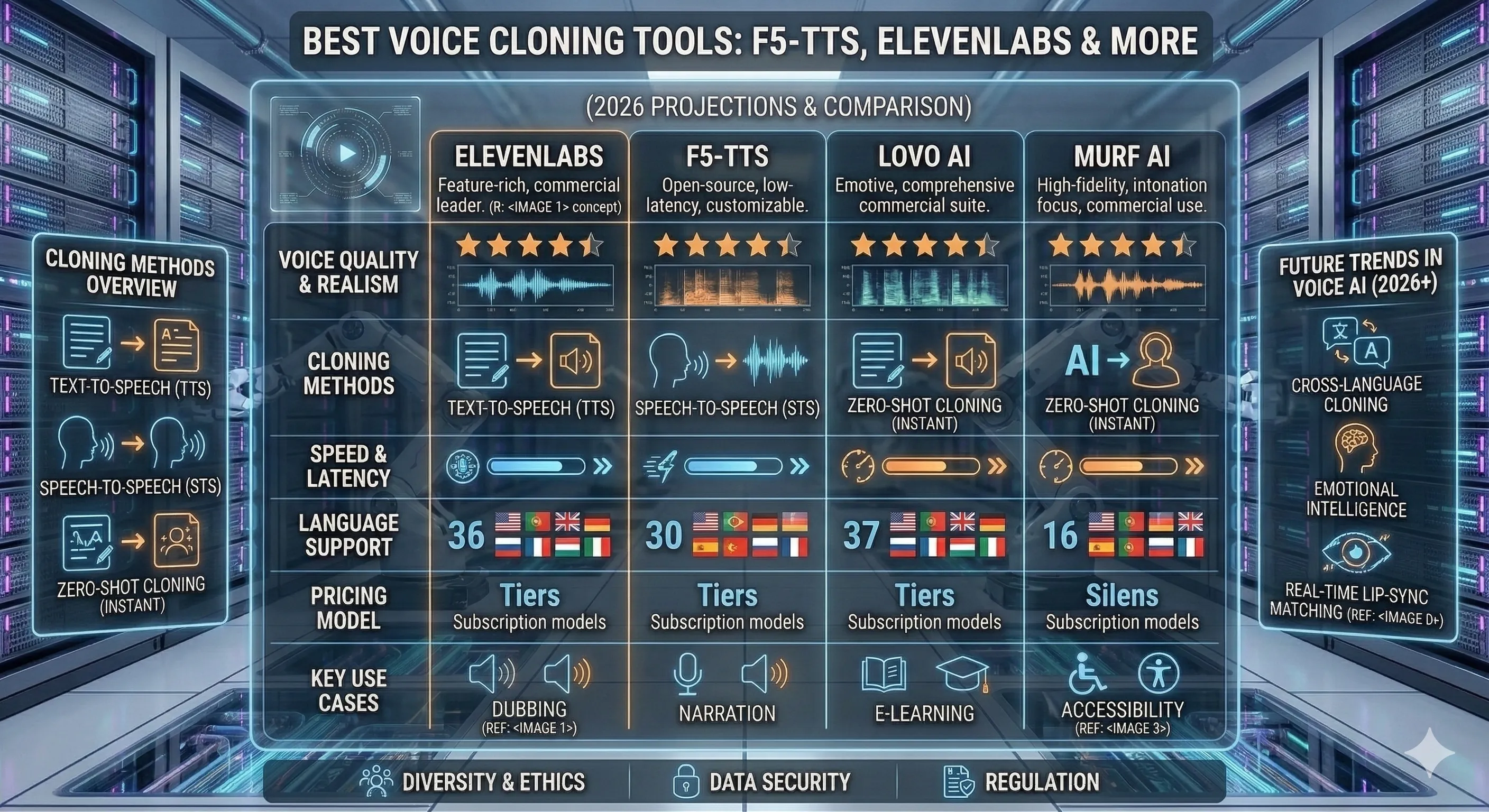
Best AI Voice Cloning Tools in 2026: ElevenLabs vs F5-TTS vs OpenVoice
Add Subtitles

Drag & Drop or Click to Upload
.mp4/.mov/.webm/.avi/.wmv
Supported Languages
Add Subtitles
Require Translation
Auto Detect
Subtitles
Credits Required:0(Available: 0)