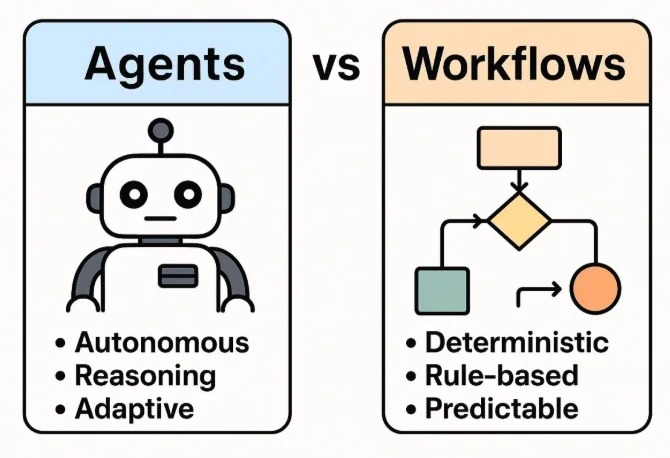
From Storyboard to AI Pipeline - Redefining Animation

Most people think AI video means 'text in, clip out.' But when you're aiming for cinematic, director-level control, it's a whole different game.
In traditional animation, every detail matters—character design, motion continuity, timing, scene transitions. Our goal is to make AI match that level of precision.
Today, animation is both an art and an engineering challenge of structured orchestration. We think like directors but build like engineers.
That's why we build controlled generation pipelines instead of one-off generations. These pipelines combine structure with creativity.
AI Video Generation Pipeline
An AI video generation pipeline transforms text prompts into polished videos through structured steps with explicit inputs, outputs, and configurations.
Now let's look at a simple example of how an AI pipeline actually works.
Step 1: Start with a Basic Prompt
A girl stands at a midnight train station, wind blowing her hair.
With the help of GPT or a local LLM, expand this into a structured JSON object with global style, character definitions, and scene-by-scene analysis.
A young woman standing alone on a midnight train platform, dim lights reflecting off the wet ground, wind blowing her hair, cinematic lighting, anime art style, 4KStep 2: Convert Prompt to Storyboard Table
| Scene | Shot | Camera | Visual | Dialogue |
|---|---|---|---|---|
| 1 | Wide | Sway | The girl waits alone at the platform. Wet pavement reflects dim station lights. Wind gently lifts her hair. | (No dialogue – ambient station sounds) |
| 2 | Medium | Push | The camera slowly zooms in on her eyes. A distant light appears — a train approaches. | She whispers, "It's time." |
| 3 | Close-up | Static | Her hand tightens on an old ticket, knuckles white. Her gaze flickers with nerves and resolve. | (No dialogue – deep inhale) |
| 4 | Wide | Handheld | The train screeches in, spraying mist. The doors open with a hiss. | (No dialogue – train arrival and footsteps) |
| 5 | Over-the-shoulder | Track | From behind, she steps inside. Her silhouette framed by the train's pale light. | She says softly, "I hope you're there." |
| 6 | Inside train | Swivel | She sits beside an empty seat, the world passing in blurred streaks outside. | (No dialogue – distant announcement echoes) |
| 7 | Insert | Static | Close-up of her phone: a message reads "I'm waiting." Her lips form a faint smile. | |
| 8 | Medium | Dolly | The train slows. She stands and approaches the door, breath catching in anticipation. | (No dialogue – heartbeat and brakes squeal softly) |
🛠️ 🛠️ Step 3: Generate Visuals
Generate high-quality keyframe images for each shot using Stable Diffusion via ComfyUI workflows.
🎬 🎬 Step 4: Add Motion and Atmosphere in After Effects
Enhance static keyframes with motion, parallax, and atmosphere using Adobe After Effects (or equivalent compositor).
🎧 🎧 Step 5: Add Voice and Subtitles
Generate voice narration aligned with the storyboard and add subtitles for accessibility and clarity.
📦 Step 6: Final Composition with FFMPEG
Combine all pieces into a single final video file with audio and subtitles using FFMPEG.
ffmpeg -f concat -safe 0 -i mylist.txt -c copy output_temp.mp4

ffmpeg -i output_temp.mp4 -i music.mp3 -filter_complex "[0:a][1:a]amix=inputs=2" output_final.mp4
# -filter_complex: Apply audio filter to mix both audio tracks
# [0:a][1:a]amix=inputs=2: Mix both audio streams (from video and music)
# output_final.mp4: Final output file with video and mixed audio
📁 What You Need
- storyboard.json – short scene descriptions
{ "project_name": "Midnight Train", "scenes": [ { "scene_number": 1, "shot_type": "Wide", "camera_movement": "Sway", "description": "Girl waits alone at a midnight train platform. Wet pavement reflects dim station lights. Wind gently lifts her hair.", "duration_seconds": 5, "visual_elements": ["night", "train station", "wind effect", "reflections"], "audio_cues": ["ambient station sounds", "distant train"] }, { "scene_number": 2, "shot_type": "Medium", "camera_movement": "Push", "description": "Camera slowly zooms in on her eyes. A distant light appears — a train approaches.", "duration_seconds": 4, "visual_elements": ["close-up", "eyes", "approaching train light"], "audio_cues": ["train approaching", "whisper"] } ], "style": "cinematic anime", "aspect_ratio": "16:9", "fps": 24 } - prompts.json – GPT-expanded prompts
{ "base_prompt": "A girl stands at a midnight train station, wind blowing her hair.", "expanded_prompts": { "scene_1": { "visual_description": "A young woman standing alone on a midnight train platform, dim lights reflecting off the wet ground, wind blowing her hair, cinematic lighting, anime art style, 4K", "camera_instructions": "Wide shot, slight camera sway to create tension, shallow depth of field", "lighting": "Low-key lighting with high contrast, blue hour ambiance, artificial station lights casting long shadows" }, "scene_2": { "visual_description": "Close-up of the woman's eyes, reflecting the approaching train light, detailed eyelashes, subtle eye movement, cinematic anime style", "camera_instructions": "Slow push-in, slight handheld shake for intensity, focus pull from eyes to reflection", "lighting": "Chiaroscuro lighting, single key light source from the approaching train" } }, "style_guide": { "color_palette": ["#0a1a2f", "#1a3a5f", "#4a90e2", "#f5f5f5"], "mood": "Mysterious, anticipatory, cinematic", "art_references": ["Makoto Shinkai's night scenes", "Ghost in the Shell lighting"] } } - scene1.png, scene2.png – image outputs
- scene1.wav – voice narration per scene
- build_project.jsx – AE import + animation script
- combine_video.sh – FFMPEG merge script
Take the next step
Putting what you read into practice.
Related Articles
Creator Tools
Best AI Tools for Video Content Creators in 2026: Descript vs ElevenLabs vs Runway
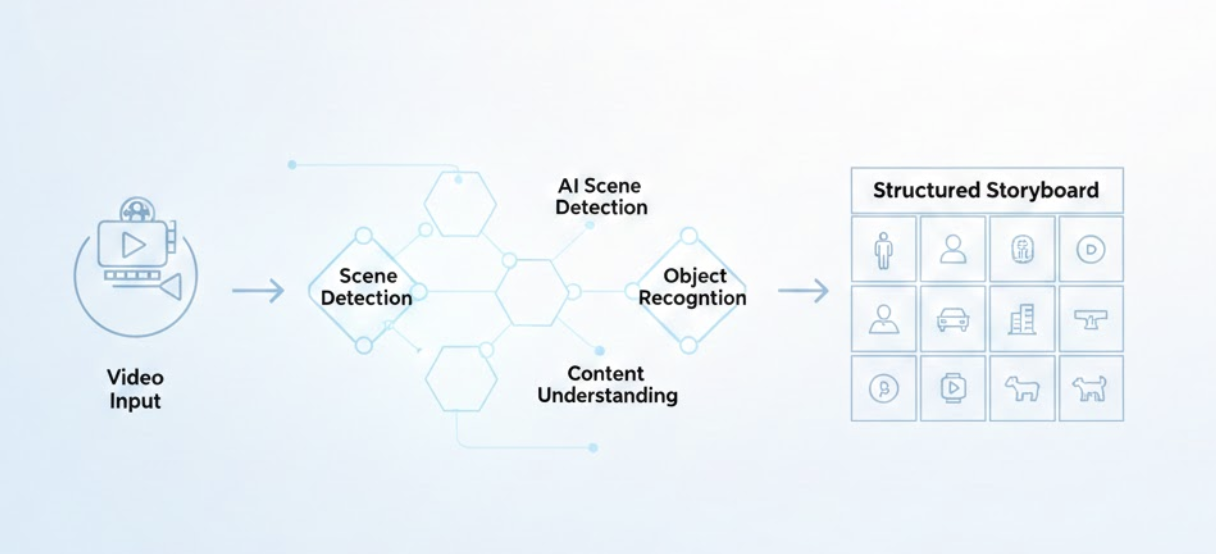
From Raw Footage to Storyboards: AI-Powered Video Analysis