Designer Toy IP Merchandise Design: The 2026 AI Production Workflow
An aerospace-themed designer-toy IP studio sent us a real RFQ last week (anonymized for confidentiality). The deliverable list reads like a snapshot of where the trendy-toy and cultural-creative industry actually is in 2026: - **Core IP optimization** — world-view setting (500-word brief), main character key visual, 5-view drawings, 6-pose action library, 30-page VI specification manual - **2D extensions** — 16-piece emoji pack (static + animated), 2 high-precision sci-tech posters, 5 core pattern designs plus 5 standard merch surface designs (canvas bag, T-shirt, mug, work badge) - **3D production** — industrial-grade 3D character model, figurine part-separation diagrams, physical-merch process drawings (fridge magnets, metal-enamel badges) with mold tolerances and Pantone color codes - **Sample production** — 200 each of two plush dolls (aerospace-textured), 200 each of two resin figurine blind boxes, embroidered patches, fridge magnets, woven gift bags Industry-standard pricing for design alone (not factory production): roughly **8,000-15,000 RMB per set for core IP optimization**, **6,000-10,000 RMB per set for 2D extensions**, **12,000-18,000 RMB per piece for 3D engineering**. The economics tell you exactly where AI helps and where it does not. This post is the workflow framing IP studios actually need — what AI delivers reliably on the 2D side of this RFQ, why 3D engineering still sits outside AI's range, and how Curify's five-template IP merch stack maps to each lane of a real designer-toy brief.
What designer toy and cultural-creative merch design actually involves
Why does a 5 RMB sticker become a 50 RMB blind-box figurine? Because merchandise now sells emotional value, not just utility. As product functions converge, young consumers pay a premium for goods that carry emotional resonance and a cultural anchor — a healing mascot, a hometown landmark, a fandom to belong to. That demand is what makes the IP-merch workflow below worth running: the design is where the margin lives.
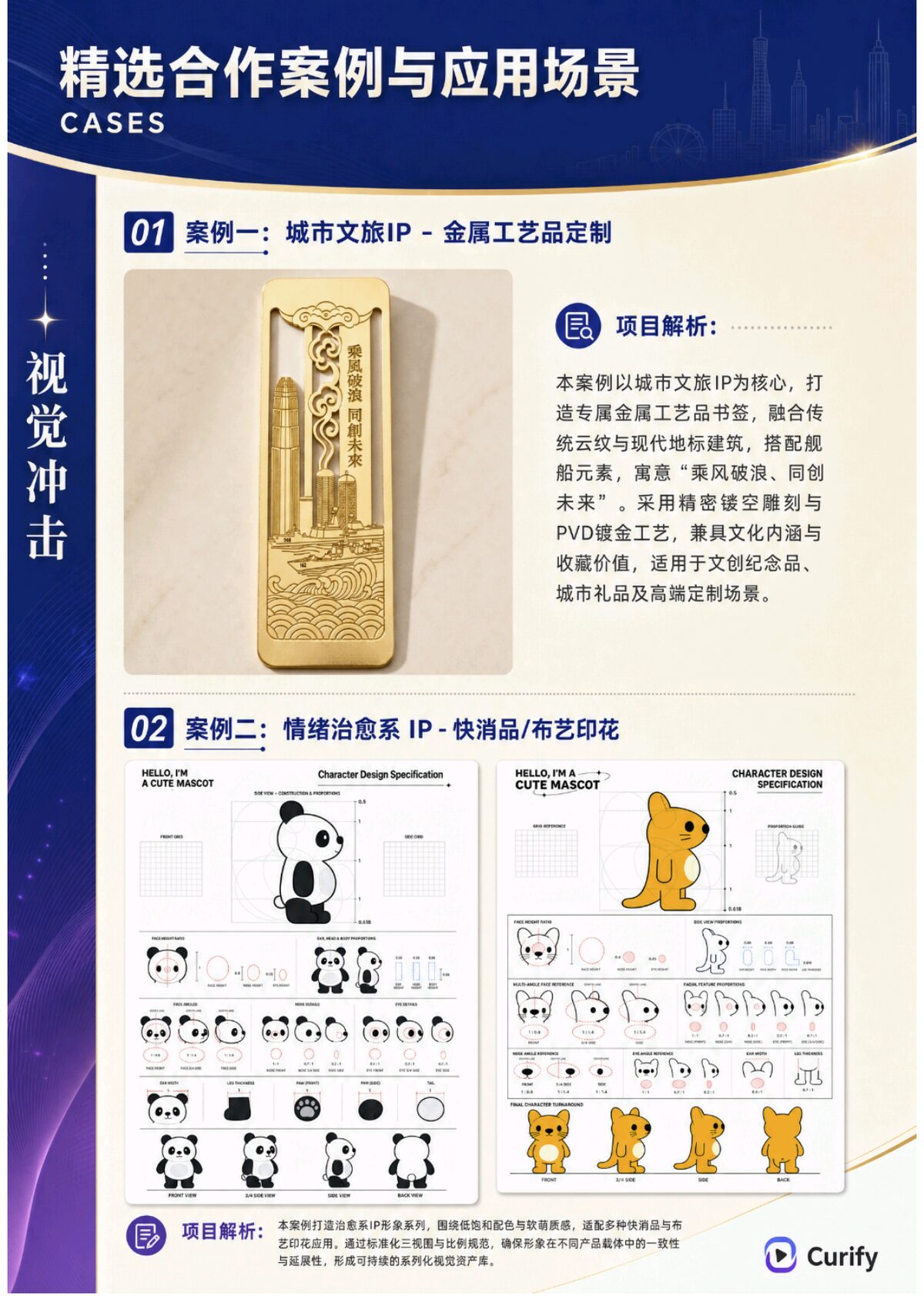
The market also spans more than designer toys. The same workflow serves three overlapping verticals: designer toys (潮玩) — blind boxes, resin figurines, plush; city cultural-tourism (文创) — metal-craft bookmarks, museum-shop goods, landmark souvenirs; and emotional-healing consumer goods (情绪治愈) — mascot-driven FMCG, stationery, fabric prints. Each starts from one IP and fans out into a coordinated SKU matrix.
The 2026 designer toy + cultural-creative (潮玩文创) industry has converged on a four-lane deliverable pattern that almost every IP studio quote follows:
1. Core IP optimization. The IP's narrative, visual identity, and design specification. World-view setting (500-1,000 words), main character key visual, multi-view drawings (front / side / back + lineart + color), an action library, and a 30-page Visual Identity manual. Deepest creative work; the foundation everything downstream sits on.
2. 2D planar extensions. The visible application layer — emoji packs (16-piece standard for WeChat distribution), industrial-scene posters, supporting pattern designs, and merch surface designs (T-shirt, mug, tote, badge). High output volume per IP, high need for series consistency.
3. 3D production engineering. The handoff to the factory. High-precision 3D character model, figurine part-separation diagrams with magnetic-joint and clip locations, mold tolerance specifications, parting lines, draft-angle annotations, Pantone color codes. This is where the design becomes a product.
4. Sample production and factory follow-up. The physical objects — plush dolls, resin blind-box figurines, embroidered patches, metal enamel badges, fridge magnets, gift bags. Not design work, but the test of whether the design survived the handoff.
For an IP studio, lanes 1-2 are pure creative engineering — the studio's home turf. Lane 3 is industrial product engineering — frequently outsourced to a specialist. Lane 4 is the factory's responsibility.
The 2026 economic shift: AI has crossed the fidelity threshold for lanes 1-2 (with the right templating layer) but not yet for lane 3. Studios that understand this boundary ship roughly 3x faster on the 2D deliverables while keeping the 3D engineering on a specialist who handles tolerance, parting, and mold-readiness.
Where AI delivers — and the five-template Curify stack
Lane 1: Core IP optimization
World-view setting, main character, multi-view drawings, VI specification book. AI now handles the iteration loop fast enough that an IP studio ships a defensible v1 in days rather than weeks.
The Curify IP Character Design Specification Sheet template ships the 30-page-equivalent VI spec book output — palette, prohibited-mutation matrix, material samples, and multi-terminal color codes. Maps directly to the RFQ line IP Design Specification Manual (VI Manual).
Open the IP Character Design Specification Sheet template →
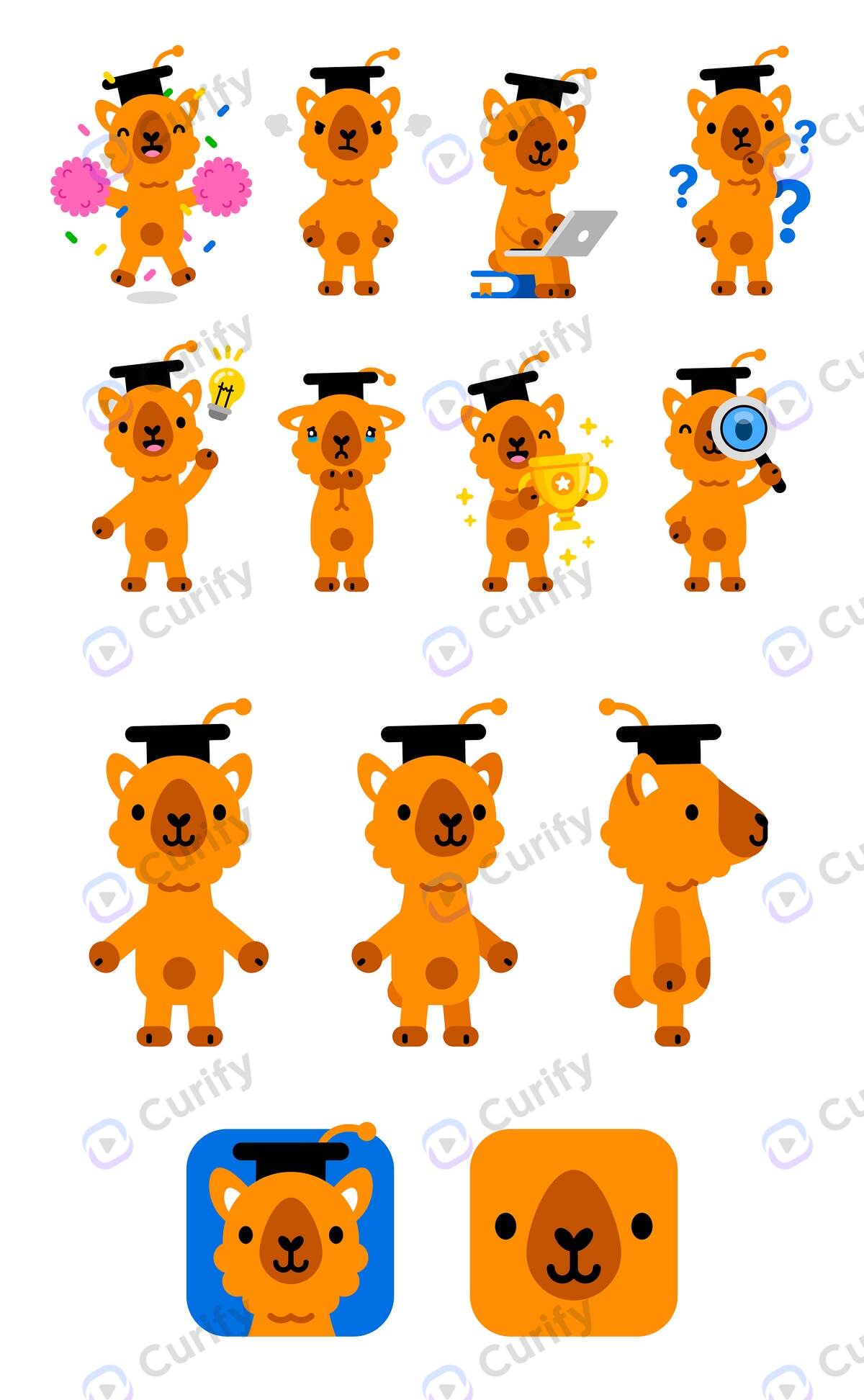
For multi-view drawings + the action library — the engineering reference modelers and animators need — the Character Sprite + Emoji Sheet template ships a 12-pose action grid in one render:
Open the IP Character Sprite + Emoji Sheet template →
What this lane does NOT replace: the IP narrative direction itself. Curify's templates accelerate the visualization once the studio has committed on world-view and tone. The creative bet — the idea of the character — still comes from the IP studio's principal designer.
Lane 2: 2D planar extensions
Emoji packs, posters, supporting patterns, merch surface designs. Three Curify templates cover the full lane.
The 16-piece WeChat-standard emoji set, rendered as a sticker-sheet poster — production-ready for expo promotion + downstream POD partners:
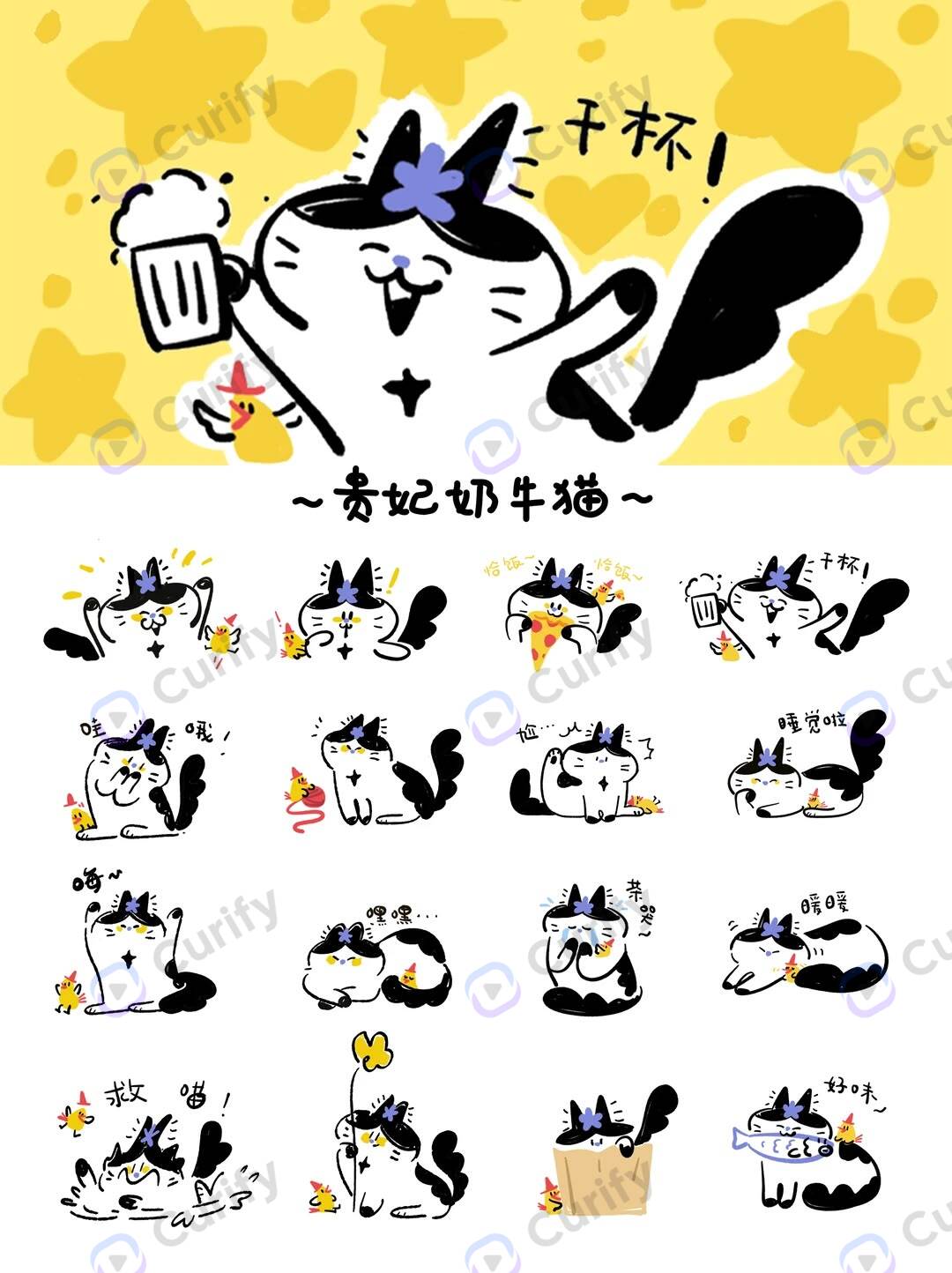
Open the IP Emoji Sticker Sheet Poster template →
The gift-box and stationery packaging — what the IP looks like on retail-shelf gift sets and stationery merch:
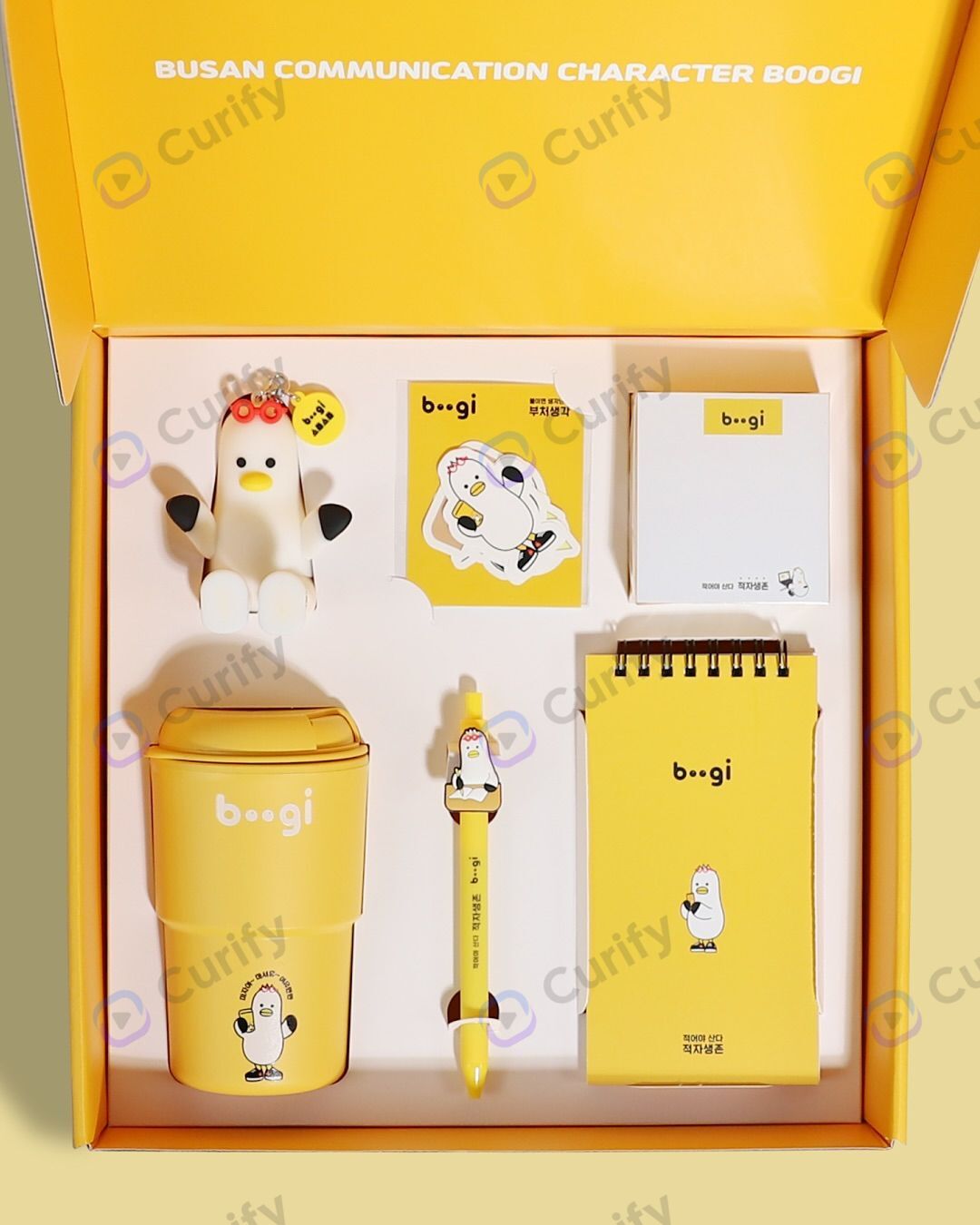
Open the IP Gift Box Stationery Set Mockup template →
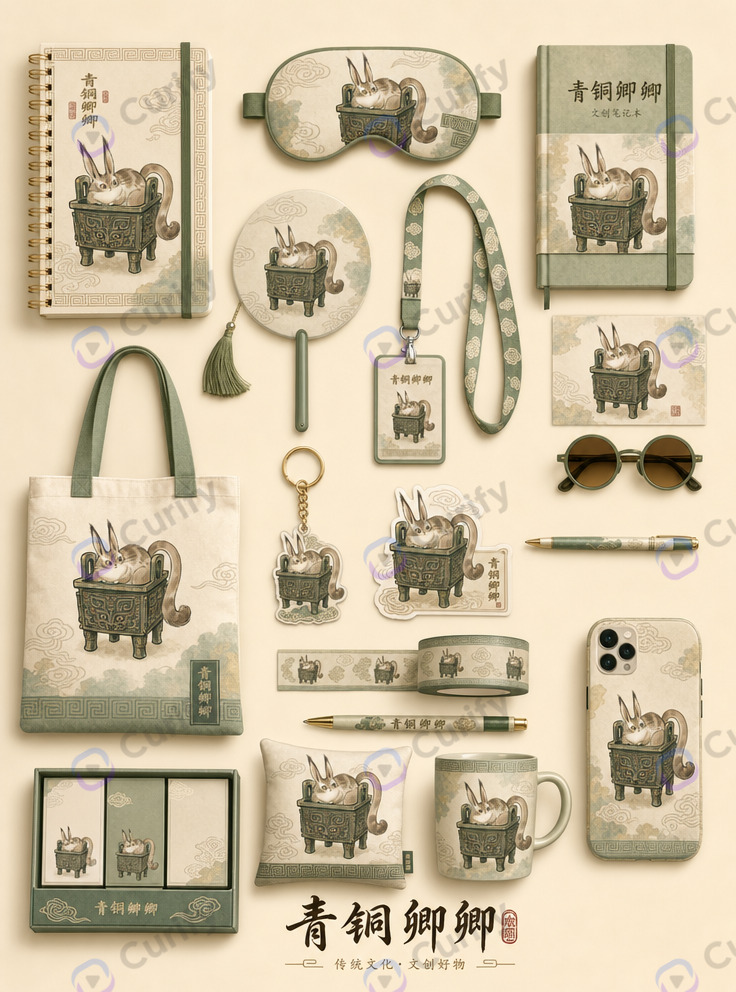
The full cultural-creative goods mockup — IP applied across tote, mug, postcard, sticker, packaging in one consolidated render. The one template that ships the breadth of 5 standard merch designs the RFQ asks for:
Open the IP Creative Cultural Goods Mockup Set template →
Combined, these three templates ship the full 2D extension layer — emoji pack + posters + merch surface designs — in a fraction of the design cycle the line items in a typical RFQ assume.
Lane 3: 3D production engineering — where AI does NOT yet deliver
Industrial-grade 3D character modeling, figurine part-separation diagrams, mold engineering. AI is still meaningfully behind here.
The gap is not visual quality — AI renders a picture of a 3D figurine convincingly today. The gap is the engineering metadata: parting lines that match the factory's mold-cavity design, draft angles that release the part cleanly from the mold, tolerance specifications that survive shrinkage on cooling, Pantone color codes that match the electroplating shop's actual palette, magnetic-joint structural locations that hold the figurine together without delaminating.
Studios attempting to push AI directly into mold-ready engineering today typically discover the gap at first sample — the visual reference looks great but cannot be cut. The studio absorbs the wasted mold cost or restarts.
The current correct answer: ship the 2D and multi-view AI deliverables (which a 3D modeler uses as visual reference) and route the actual 3D engineering through a specialist. Pricing for that handoff is roughly 12,000-18,000 RMB per piece with industry-standard tolerance + parting + Pantone documentation.
This is also why our engagement model for IP studios explicitly scopes the 2D side and excludes the 3D engineering — better to be clear about the boundary than to deliver a model the factory cannot mold.
Where this workflow has clear limits
Three places the AI-assisted IP merch workflow still falls short:
Series consistency caps at roughly 12-16 SKUs per template render. Beyond that, the IP starts drifting in subtle ways — eye proportion shifts, palette saturation drift, prop vocabulary slipping. For a typical RFQ targeting 5-10 SKUs per 2D extension category, this is well within range. For high-SKU campaigns (40+ pieces), retraining the character anchor between batches becomes part of the workflow.
Multi-language emoji packs need per-language style adjustment. The 16-piece standard works cleanly in English and Chinese. Cultural-specific emoji expressions (gestures, scenario tropes) sometimes need a manual pass on the 2-3 most regionally-loaded variants. AI handles 13-14 of 16 reliably.
Print-friendly file format is a separate handoff. AI renders deliver clean vector-ready raster output, but the studio's downstream printer typically needs vectorized PDF / AI with Pantone-coded color separations. The vectorization pass is fast (often automated tooling) but it is a workflow step, not free.
These limits are visible and manageable. The 2D lanes of the RFQ ship reliably; the 3D lane requires a specialist.
Tools & Resources
Learn about the best tools available...
Two engagement models for designer-toy IP studios
Model A — Per-IP turnkey production. For studios with their own IP narrative + main character but limited internal design capacity, Curify produces the full 2D RFQ lane — VI specification book, multi-view drawings, 16-piece emoji pack, supporting posters, and 5+ merch surface designs — at per-IP + per-batch pricing. Best fit: small-to-mid IP studios shipping 2-6 IP releases per year who want the 2D engineering off their plate.
Model B — Workflow licensing for in-house design ops. For larger studios with full creative teams who want to bring the deterministic workflow in-house, Curify ships the 5-template stack as API endpoints + configurable workflow components. The studio integrates against existing asset management, runs their own batches, keeps creative judgment internal. Best fit: established IP holders shipping 10+ IPs per year with engineering capacity to host the workflow.
Both engagements explicitly cover the 2D RFQ lanes. The 3D engineering handoff is scoped separately — we partner with specialist 3D modeling firms (12,000-18,000 RMB per piece industry standard, separate quoting) but do not ship 3D engineering ourselves. The boundary is intentional.
The operator-side use case at /use-cases/for-merch-operators covers what changes when a merch factory or POD platform integrates the same workflow.
If you are scoping an IP merch RFQ, talk to us
If you are a designer-toy or cultural-creative IP studio scoping the 2D lanes of an RFQ similar to the one above, talk to us. We work with IP studio principals directly, structure engagements to match real production timelines — a first 2D extension iteration (multi-view drawings + 8-pose action library + 8-piece partial emoji set) takes 4-7 days from receiving the IP brief.
Reach out via /contact for an initial scoping conversation. Sister posts in this merch-design family: the surface-design licensing playbook for Surtex and the three-defect diagnostic for illustrator IP cover adjacent lanes of the same vertical.
Popular Template Examples
Explore our most popular Nano Banana prompt templates to see what's possible:
One image is a sample. A product line needs the whole set.
Every Curify template runs in bulk. Send the list — SKUs, words, characters, teams, scenes — and we return the full set generated against one locked visual direction, so the line reads as a collection instead of forty unrelated images.
- Works on any template, not a special few — the same prompt structure applied across your whole list.
- One locked visual direction across the set, so a 40-design line stays on-brand end to end.
- Production-ready output where the format calls for it — die-cut paths, dielines, print resolution.
Take the next step
Putting what you read into practice.
Related Articles
merch-pod
Industrial-Grade AI for Illustrator IP: Why Generic Models Fail on Series Consistency, Pattern Precision, and Print Readiness
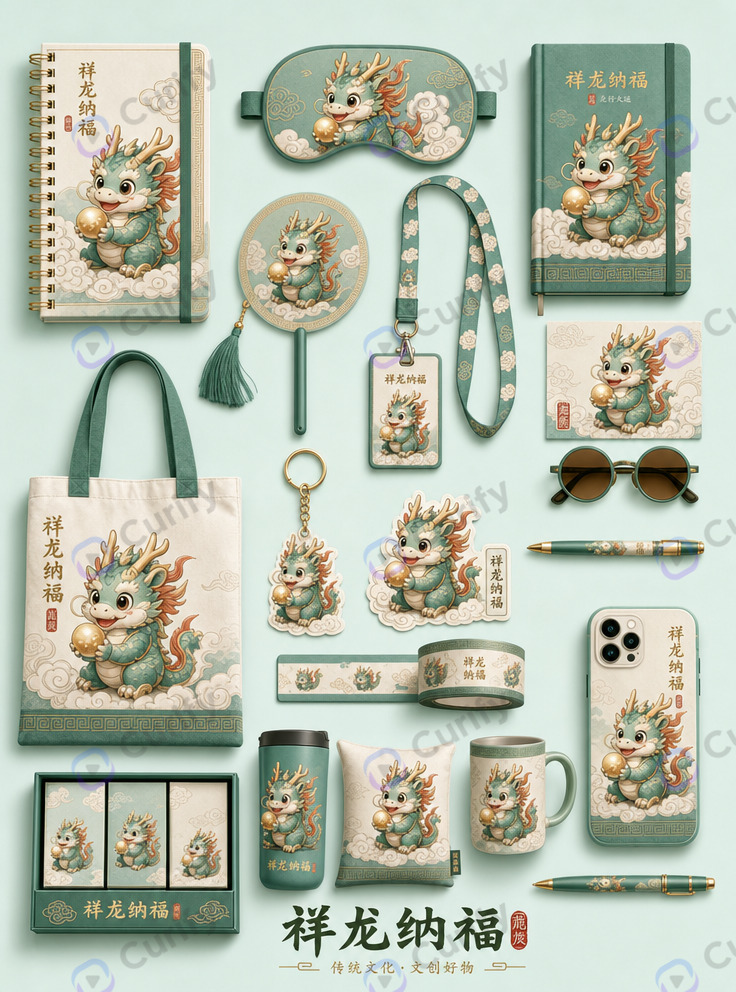
Surtex Playbook for Surface Designers: How to Pitch a Licensable Product Family, Not a Single Pattern