Surtex Playbook for Surface Designers: How to Pitch a Licensable Product Family, Not a Single Pattern
Surtex is one of the oldest surface-design and art licensing trade shows in North America — surface pattern designers, illustrators, and small studios pitch original work for licensing across stationery, textile, gift, packaging, and home categories. The pitch has always been: *here is my pattern, here are the categories I can license it into*. What changed in 2026: licensees increasingly want to *see* the pattern rendered across the actual product family before they sign — in mockup form, across multiple SKUs, not in the designer's verbal pitch. This is the playbook for walking into Surtex (or NY NOW, which absorbed Surtex into its Handmade + Designed Wholesale zone) with a coordinated collection plus a full AI-rendered product family rather than a portfolio of standalone patterns. Same designer hand, much sharper pitch. 
What licensees actually want at Surtex (beyond the pattern)
Surtex (and NY NOW) is fundamentally a manufacturer-meets-designer marketplace. Licensees walking the floor are stationery brands sourcing next-season notebook patterns, textile companies sourcing fabric prints, gift companies looking for wrap and bag designs, and packaging or POD operators looking for design IP to plug into fulfillment pipelines.
The unspoken bar at the booth has shifted. Three things licensees quietly evaluate beyond the pattern itself:
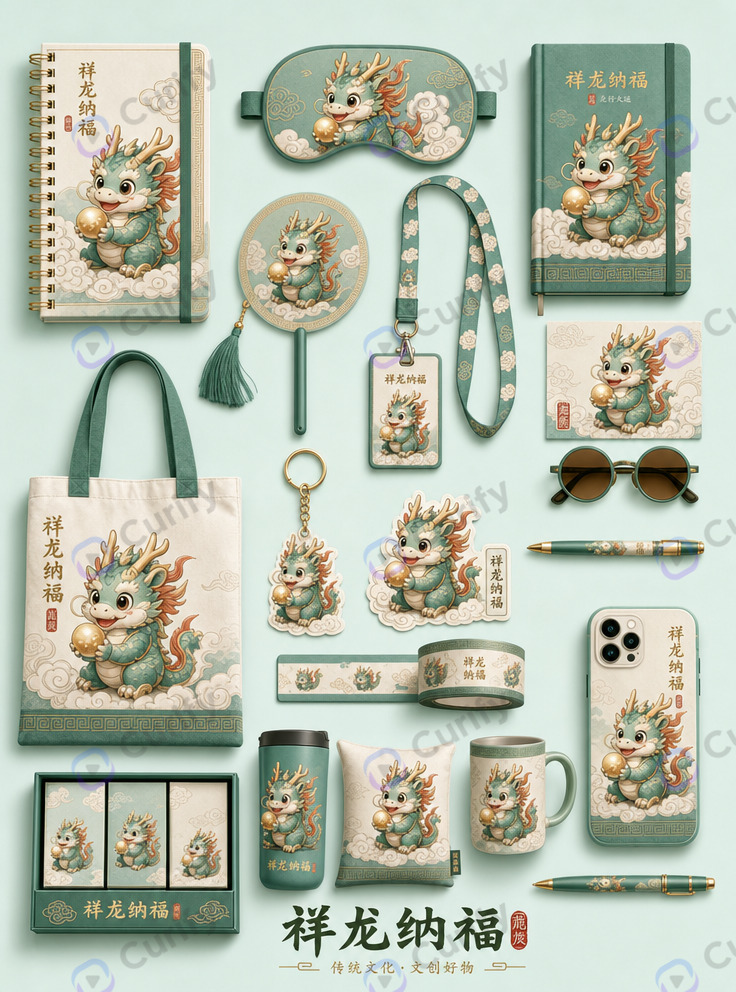
1. Visualization at category breadth. Can they immediately see the pattern on a notebook AND a gift bag AND a tea-towel AND a mug? Designers handing over a single hi-res file and a verbal *this would work great on stationery* lose to designers walking in with rendered mockups across 8-12 SKU formats. Breadth signals portability — the pattern is not bound to one product type.
2. Coordinated collection feel. One pattern licensable into one category is a small deal. A coordinated 4-6 piece collection — main pattern plus 3-5 coordinating patterns (border, mini-print, stripe, blender) — is a real deal. Licensees pay 3-5x more for coordinated collections because they can ship a full SKU line from it.
3. Print-readiness for the buyer's production constraints. Stationery needs linework that screen-prints cleanly. Textile needs repeats that tile seamlessly. Gift-wrap needs patterns that work at 4-inch and 24-inch reproduction scale. The designer who has done that homework wins.
None of this is new. What is new is that the AI workflow makes it economically feasible to walk in with all three pre-built across a full collection, not just the lead pattern.
The four-stage AI workflow for surface-designer licensing
Stage 1: Lock the lead pattern as a deterministic asset
Start with the pattern you actually drew. Not an AI generation. Your original surface pattern — the one with your eye, your palette, your decorative vocabulary, the thing the licensee is buying. Scan at production resolution. This is your lead asset; everything downstream is conditioned on it.
The deterministic guarantee: every product mockup, every coordinating pattern, every category-extension render must visibly come from this same design hand. If the AI drifts to a different aesthetic register, the collection stops looking like a collection and the licensee can tell.
Curify's character-lock and structure-constraint mechanisms (the same ones a SF Bay Area cultural-creative studio used for series-consistent mascots — see the companion post on industrial AI for illustrator IP) work identically here. The *character* is your pattern's design language rather than a mascot; the lock is the same layer.
Output of stage 1: one locked asset plus a one-page style guide describing the palette, line discipline, and decorative vocabulary the rest of the workflow has to respect.
Stage 2: Generate the coordinating-pattern family (3-5 supporting patterns)
Coordinated collections come from here. From the lead pattern, generate 3-5 coordinating patterns that share the palette and vocabulary but vary in scale, density, and structure:
- Mini-print — lead motif scaled down 4-6x and densified, for small-area applications (gift tags, phone cases, end-papers)
- Border — stripe-form arrangement of the lead motifs, for ribbon edges, mug rims, journal spines, wrap-roll edges
- Blender — flat or near-flat texture in the same palette, for backgrounds and large product areas where the lead pattern would be too busy
- Stripe or geometric — simplified geometric in the same palette, for surfaces needing repetition without motif detail
- (Optional) Secondary motif — a different element from the same illustrative universe
The Curify decorative-template family provides the working grammar — tile-repeat, motif-density-adjustment, palette-quantize. The licensee now sees 4-6 coordinated patterns instead of one. That is the difference between a stationery-accent deal and a whole-SKU-line deal.
Stage 3: Render the product family mockups (8-12 SKU formats)
Visualization at category breadth. Take the lead pattern plus coordinating family and render onto actual product mockups across the categories you want to license into. Curify's IP merchandise template stack does the bulk of the work:
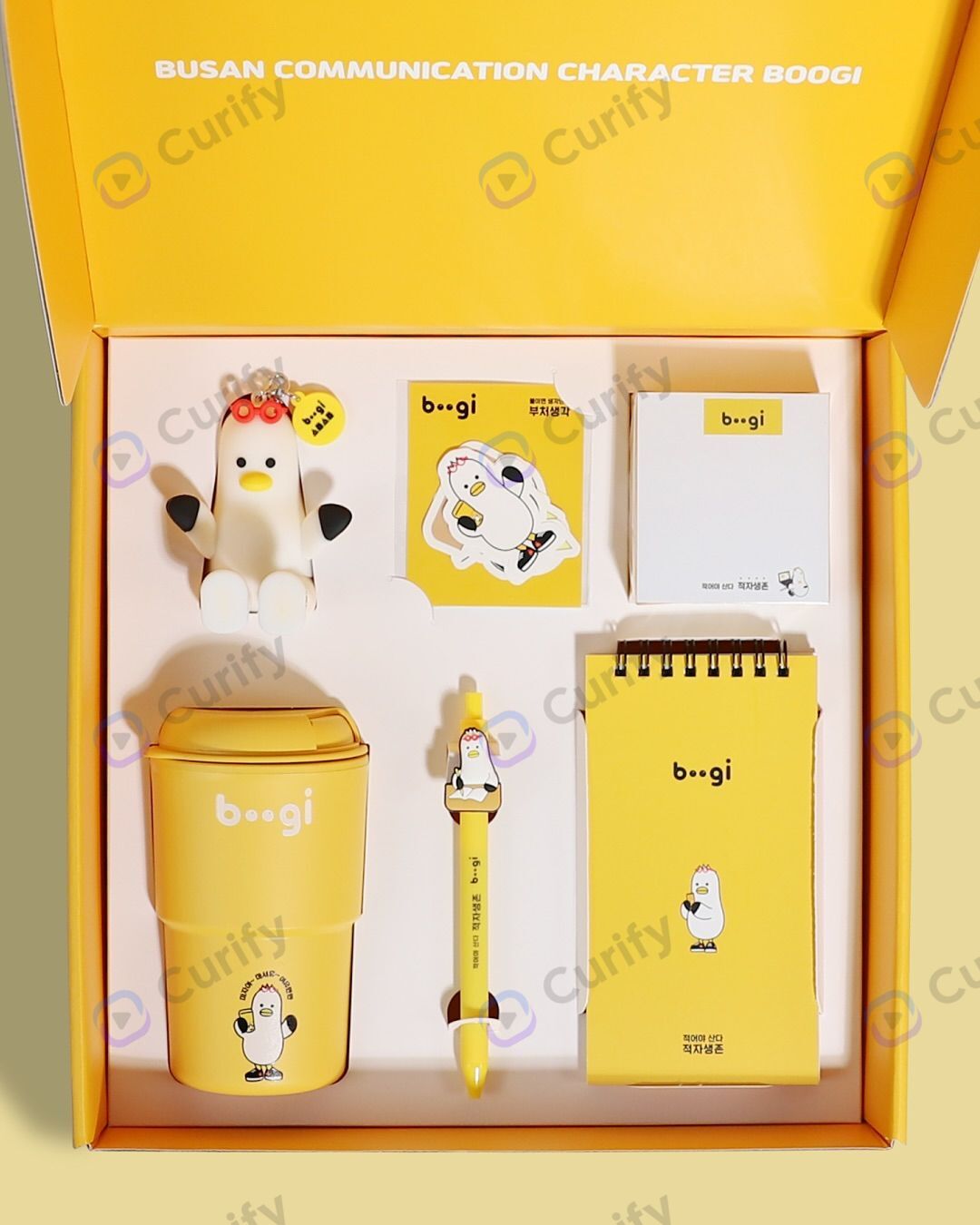
Open the IP Gift Box Stationery Set Mockup template →
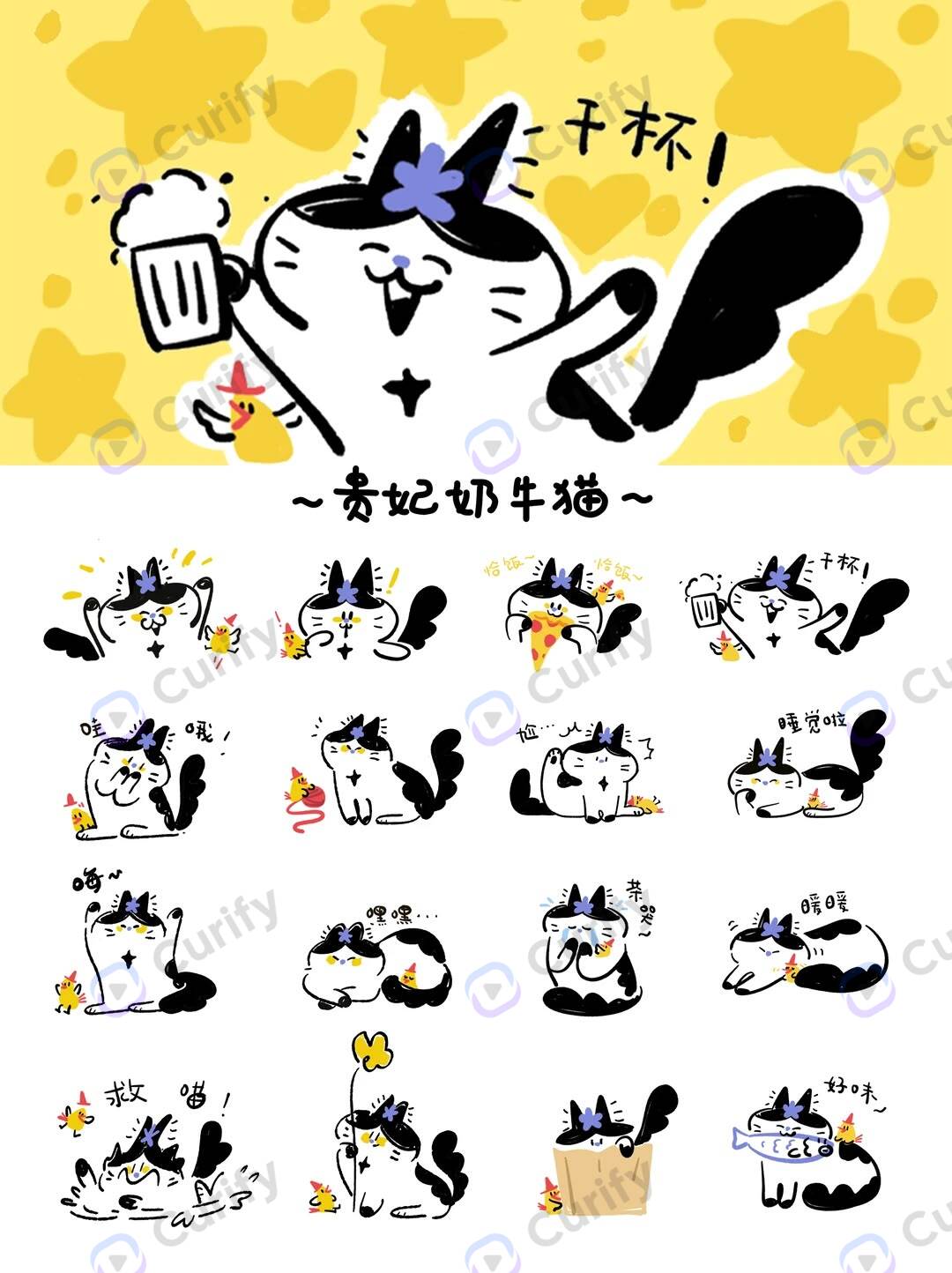
Open the IP Emoji Sticker Sheet Poster template →
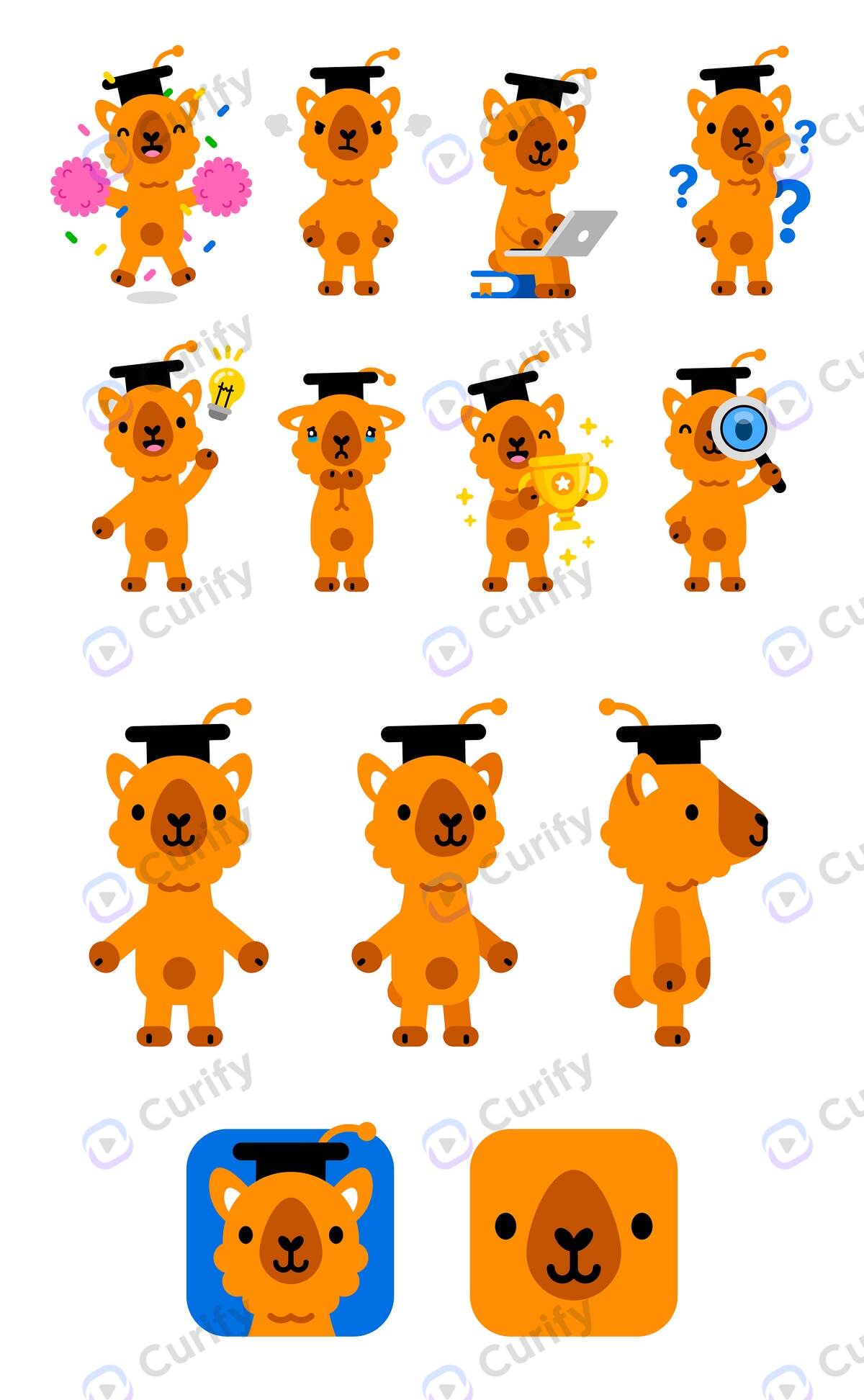
Open the IP Character Sprite + Emoji Sheet template →
Templates handle the production-grade mockup work — angle, lighting, surface texture, package geometry — so the designer focuses on which 8-12 product formats to show and which coordinating pattern goes on which format. Render time is hours, not weeks. Pick the categories matching your licensee target list, not all of them.
Stage 4: Print-readiness check per licensee category
The quality gate before the show. Each rendered mockup goes through a print-readiness check against the licensee's category-specific constraints:
- Stationery — linework consistency for screen-print and offset; vector-friendly edges; foil-stamp area readiness for premium pitches
- Textile — seamless-tile verification at 8/12/24-inch reproduction; selvage color fidelity; rotary-screen vs digital-print file format
- Gift, wrap, packaging — scale-flexibility from 4-inch product surface to 24-inch wrap-roll; registration color readiness; bleed and trim on die-lines
- POD, direct-to-fabric, direct-to-substrate — sRGB vs CMYK and raster vs vector compatibility; white-base requirements; per-platform dimension specs
Curify's deterministic-workflow stack handles most of this automatically — the same structure-constraint and layout-fix mechanisms that solve print-readiness for illustrator IP solve it for surface pattern IP. What is left for the designer is the category judgment call: which licensee categories to pitch, which to skip.
Output of stage 4: your Surtex pitch packet. Lead pattern + coordinating family + 8-12 rendered mockups + a one-page print-readiness summary per category. The conversation with the licensee starts at *which categories do you want to license into?* rather than *can your pattern do this product?*
Where this workflow does not replace the designer
Three places the AI workflow has clear limits:
The lead pattern still has to be yours. The pipeline is conditioned on the original. A weak lead pattern produces a weak collection — the AI extension does not save it. The workflow scales the output of a talented hand; it does not replace one.
Licensee category judgment is yours. Which categories your pattern actually has a shot at licensing into depends on your aesthetic, portfolio history, relationships, and the licensee's current acquisition focus. The AI helps visualize options faster; it does not pick categories.
Seamless-tile work still needs review. AI repeats are dramatically better than 18 months ago, but a textile licensee will spot a non-seamless repeat at 24-inch reproduction. Run textile renders through a tile-verification step. Curify ships a tile-check helper; non-Curify users should at minimum preview each repeat at full reproduction size.
Licensing etiquette has not changed. Show up with rendered mockups, not with claims about how AI can do anything. Licensees who feel pitched on *AI can extend your IP to any category* will pattern-match you to spammy POD shops and disengage. Pitch the outcome — 12 ready mockups, coordinated collection, print-ready — and let the workflow stay behind the curtain.
Tools & Resources
Learn about the best tools available...
Two engagement models for surface designers and small studios
Two paths, depending on what the designer or studio needs heading into the show:
Model A — Pre-show portfolio production. Curify produces the lead-pattern lock plus coordinating-pattern family plus 8-12 rendered SKU mockups as a finished pitch packet, on per-collection pricing. Best fit: solo surface designers and small studios who would otherwise spend 3-6 weeks manually mocking up a single collection's category extensions, and want the show-floor visualization without bringing AI workflow capability in-house.
Model B — Workflow licensing for studios with their own design ops. For studios with their own designer team and mockup capability, Curify ships the workflow stack as API endpoints and configurable workflow components. Best fit: established licensing studios scaling 4+ collections per show cycle, and agencies repping multiple designers under one roof.
Both paths preserve the core promise: the lead pattern stays your hand. The downstream visualization is just faster.
If your licensee is a POD or direct-to-fabric platform rather than a traditional manufacturer, the same workflow output drops directly into their fulfillment pipeline. The /use-cases/for-merch-operators page covers that downstream path.
If you are walking into Surtex or NY NOW this season, talk to us
If you are showing at Surtex, NY NOW, or any of the surface-design and art licensing trade shows this season, and you want to walk in with a coordinated collection plus 8-12 category-rendered mockups instead of a portfolio of standalone patterns, talk to us. We work directly with surface designers and small licensing studios, and structure engagements to match the show calendar — a first iteration (lead pattern lock + 3 coordinating patterns + 6 SKU mockups) takes 3-5 days from receiving your lead asset.
Reach out via /contact for an initial scoping conversation. A full pitch-packet build for one collection runs 2-3 weeks; tight-deadline turnaround is possible if the show is inside 4 weeks. Fast enough to use against an actual show schedule, slow enough to do quality work that survives the booth conversation.
One image is a sample. A product line needs the whole set.
Every Curify template runs in bulk. Send the list — SKUs, words, characters, teams, scenes — and we return the full set generated against one locked visual direction, so the line reads as a collection instead of forty unrelated images.
- Works on any template, not a special few — the same prompt structure applied across your whole list.
- One locked visual direction across the set, so a 40-design line stays on-brand end to end.
- Production-ready output where the format calls for it — die-cut paths, dielines, print resolution.
Take the next step
Putting what you read into practice.
Related Articles
design-branding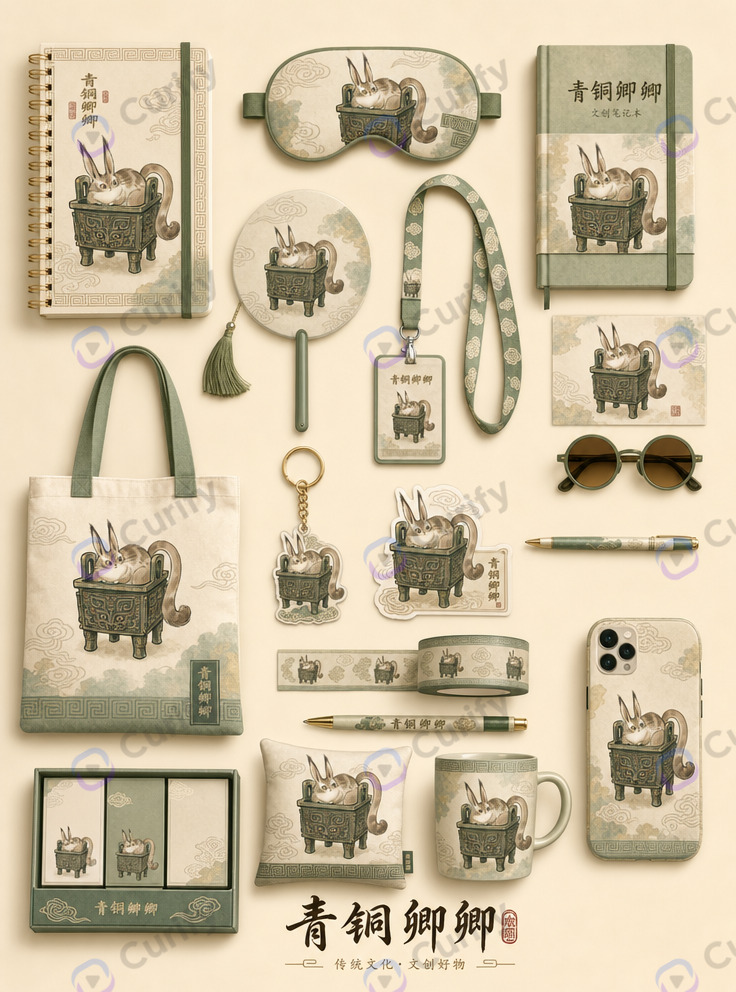
Designer Toy IP Merchandise Design: The 2026 AI Production Workflow
Industrial-Grade AI for Illustrator IP: Why Generic Models Fail on Series Consistency, Pattern Precision, and Print Readiness