AI Packaging Design: From Brief to Mockup Set in 30 Minutes
Packaging design is the highest-leverage step in a product launch — the unboxing photo IS the marketing. Until recently, AI was good enough for concept mockups, but designers still spent 8–15 hours per SKU in Illustrator to ship a print-ready pack. What changed is the **workflow**. Prompt templates now bake in packaging grammar (label hierarchy, ingredient strip, barcode block, brand-color anchor), and the process runs end to end: one brief produces three moodboard directions in seconds; you tune a single variable to lock the composition; then the chosen look extends to print-ready mockups — cup, tote, gift box, label. The bottleneck is no longer designer hours; it's the brief. This guide covers that end-to-end workflow, the four packaging patterns that ship cleanly, and the exact Curify templates and prompt phrases behind each.
The end-to-end workflow (and where production takes over)
A professional packaging pass now runs as one continuous workflow — the same one a studio would bill days for. Take an Oriental botanical herbal-tea brand as the worked example.
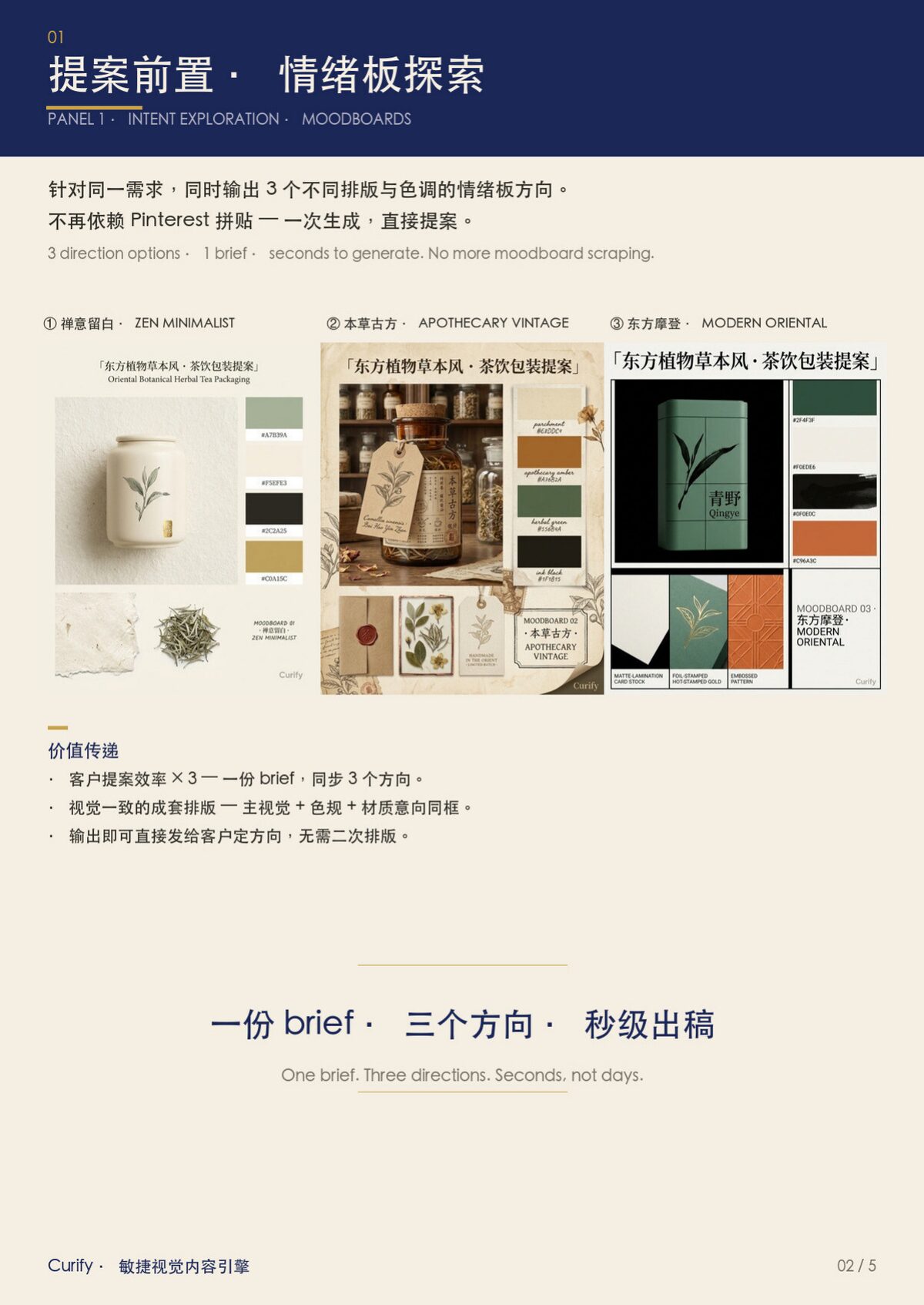
1. Explore — one brief, three directions. From a single brief the template outputs three distinct moodboard directions (Zen Minimalist, Apothecary Vintage, Modern Oriental) with matched palette and material intent — seconds, not a Pinterest-scraping afternoon. You send the client directions, not a blank page.
2. Control — move one knob. Pick a direction and tune a single variable — subject scale at 10 / 20 / 30 percent, say — while palette, layout, and composition stay fixed. It is parameter tuning, not gacha regeneration, so a client revision becomes a dial, not a re-shoot.
3. Extend — from concept to print-ready. The locked look flows onto the real touchpoints — double-wall cup, tote bag, lid-and-base gift box, labels — as one coordinated set.
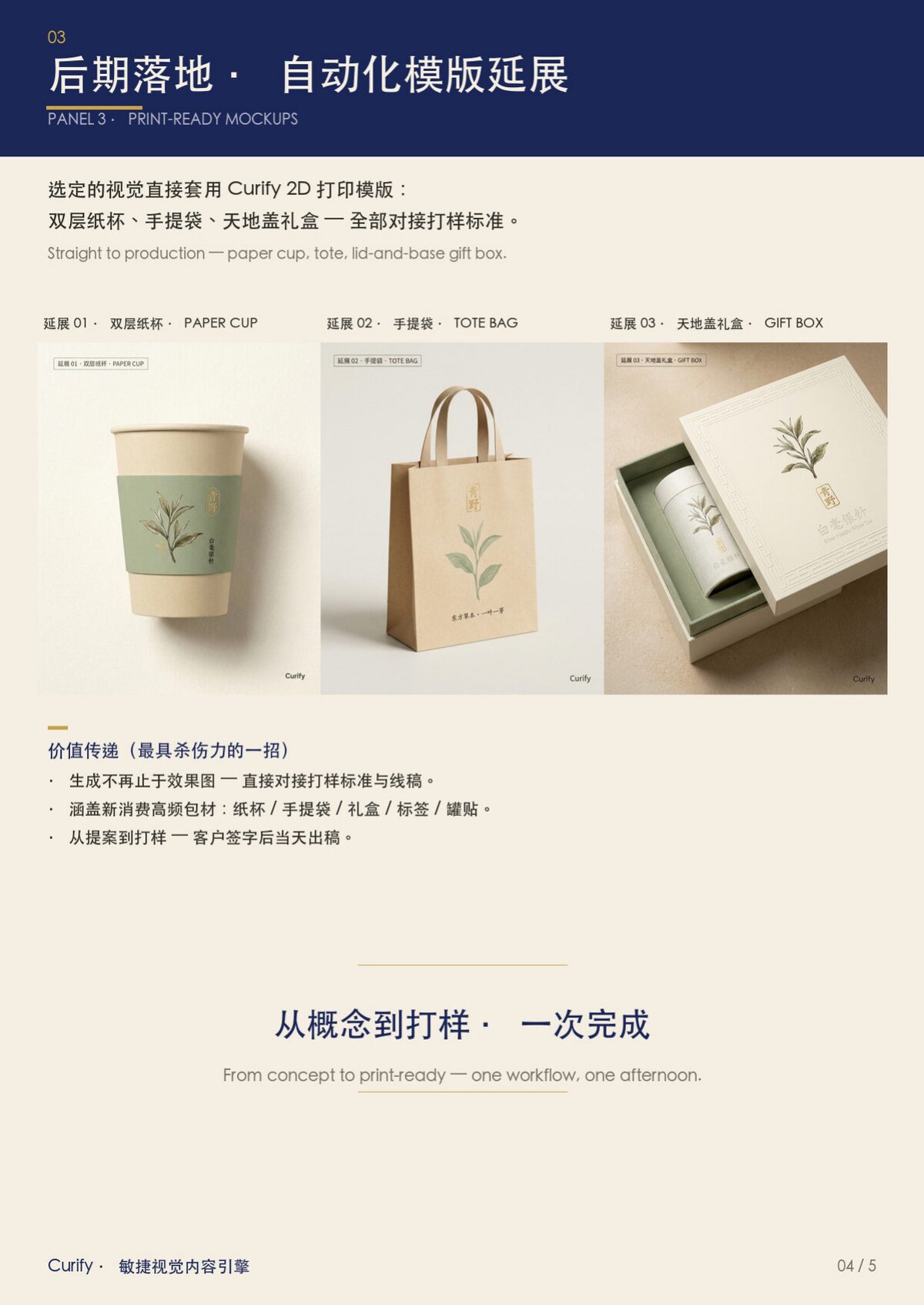
Where production starts. AI gives you the visual mockup (Instagram-ready, deck-ready, client-approval-ready). The print-ready dieline — bleed, knife-cut, color separations — still happens at packaging vendors like Lab Brands, Packlane, or Pakible. The AI step replaces the 8–15 designer hours per SKU on the creative side, not the production engineering on the manufacturing side.
Four packaging patterns ship cleanly today, each mapped to a Curify template family: (1) food product packaging, (2) IP creative cultural-goods mockup sets, (3) gift box + stationery sets, (4) full brand-VI visual packs.
Four AI packaging patterns that ship cleanly
Pattern 1: Food product packaging — single-SKU front-and-side
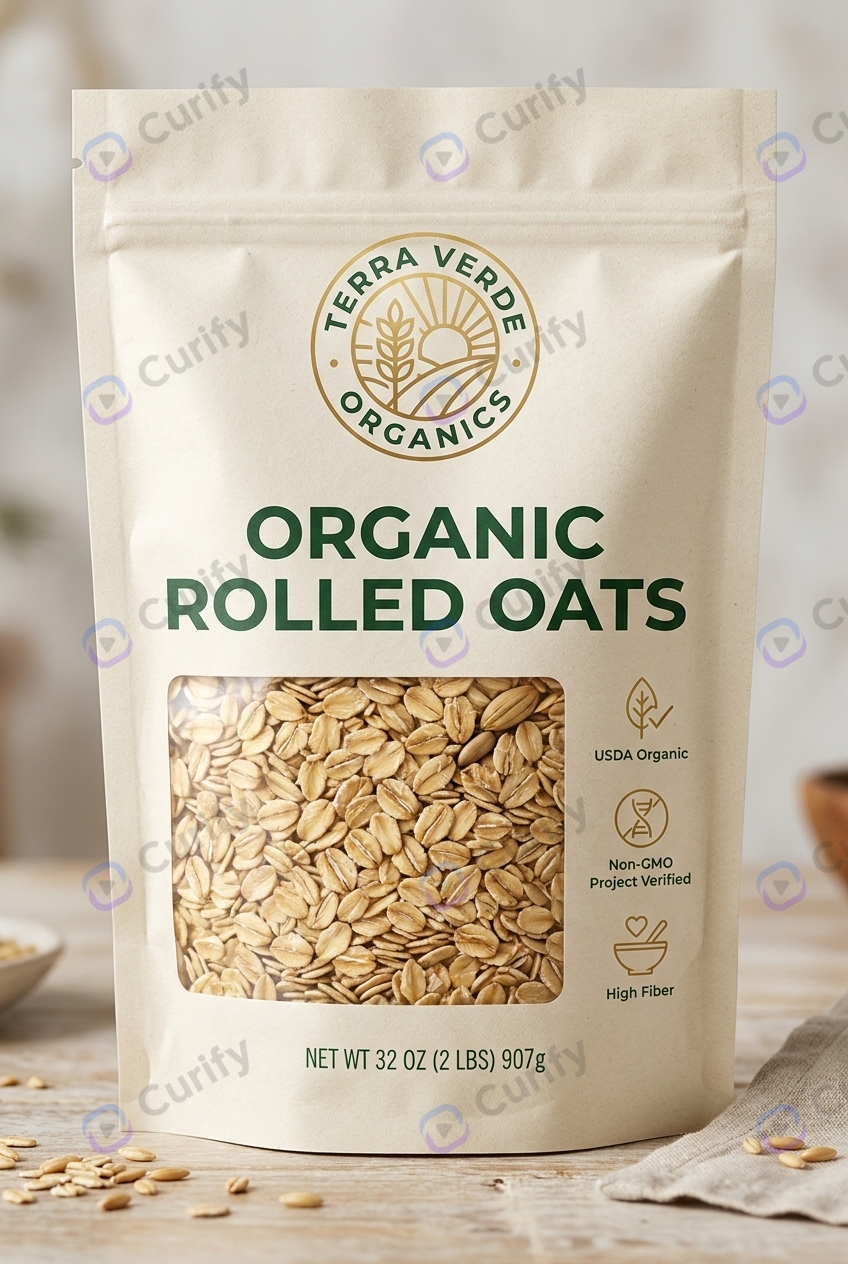
Food packaging is the highest-volume use case. CPG launches, DTC food brands, and POD operators all need front-of-pack mockups before the bottle/box dieline goes to the printer. The Curify template generates front + side + ¾ rotation for one SKU in unified label hierarchy.
Open the Food Product Packaging Design template →
What the template bakes in: USDA Organic badge positioning, nutrition panel side-of-pack standard, ingredient strip vertical alignment, bottom barcode block, paper-stock-friendly color palette. Most AI generators put the certification badge in the wrong corner and reverse the ingredient panel — this template handles all of it.
Use case map: new CPG SKU launches (food + beverage + snack brands), DTC pivot decks (changing pack design for a new ICP), Shark Tank pitch decks (showing 3 SKU variations in 30 minutes).
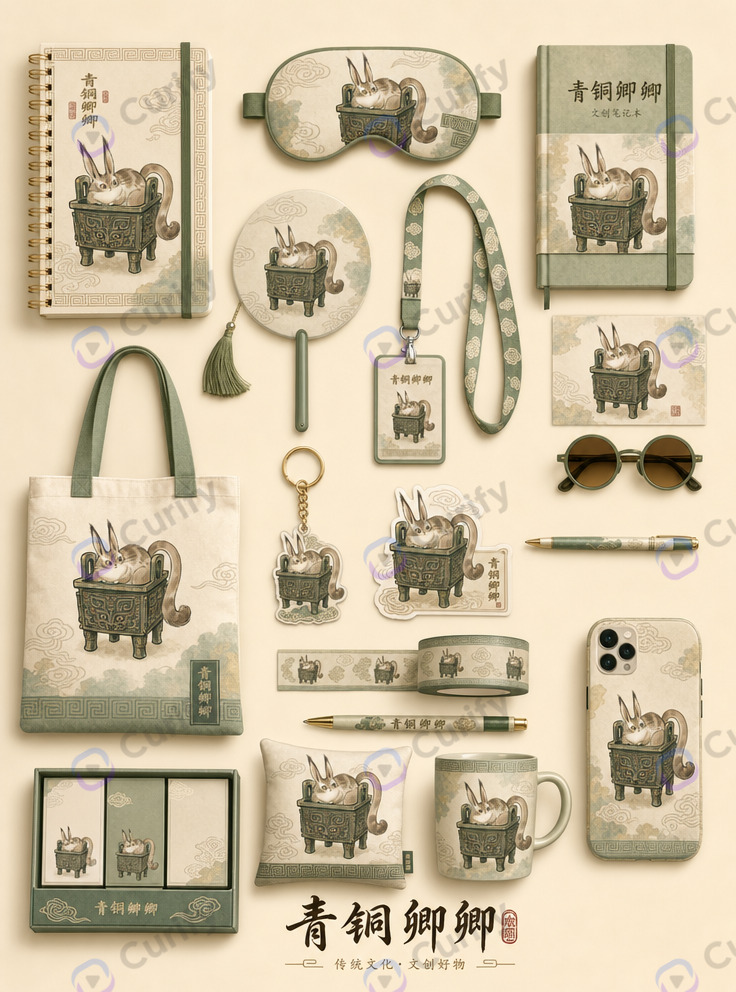
Pattern 2: IP creative cultural goods — multi-SKU merchandise system
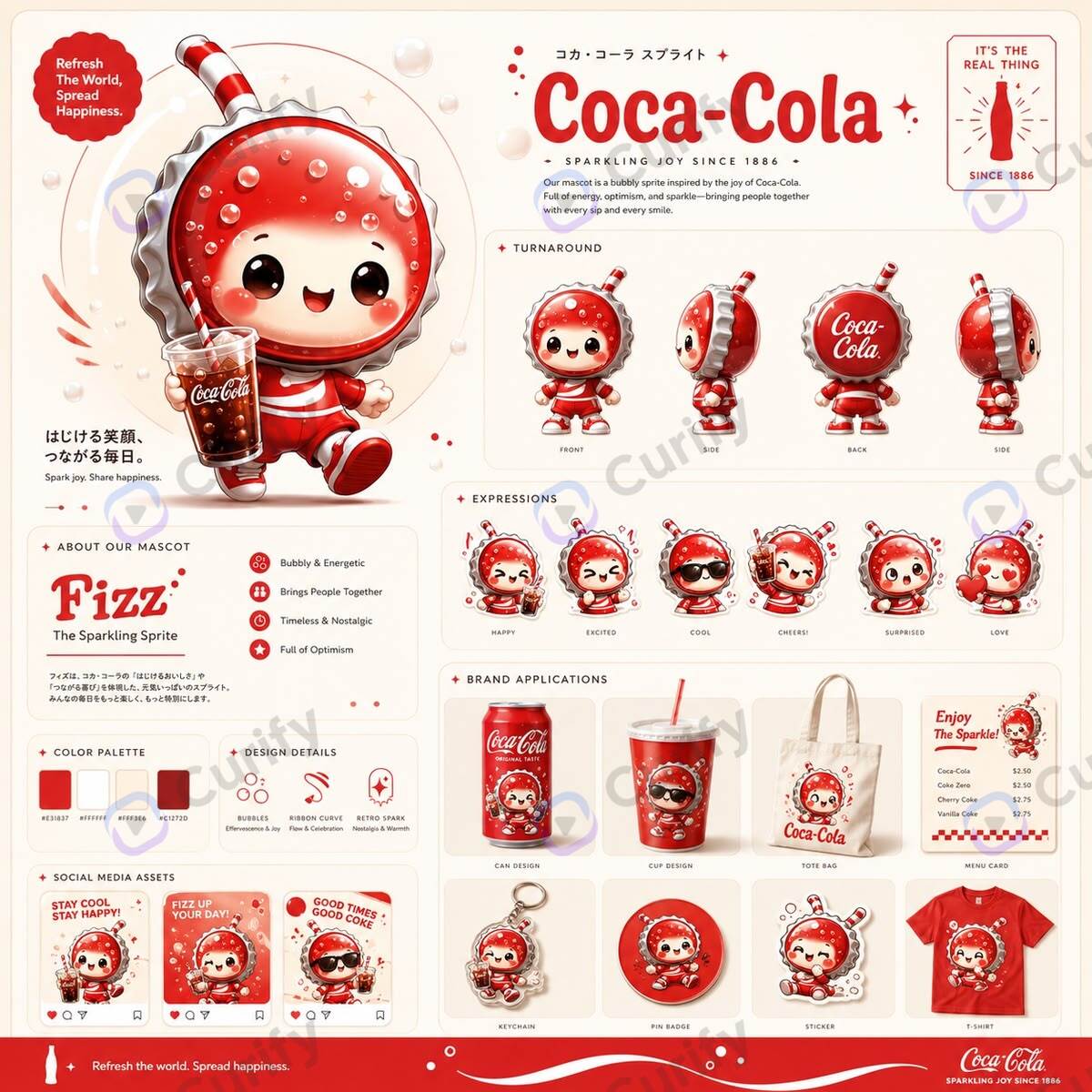
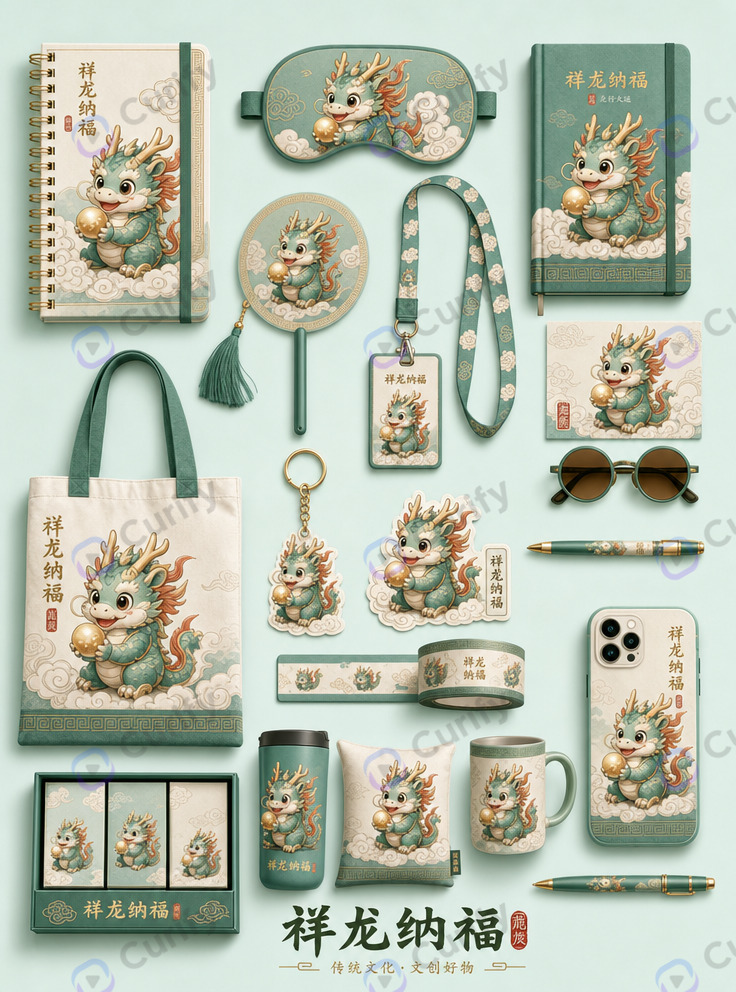
Move past single-SKU packaging into a full merchandise system. The Curify template generates 4-6 SKUs around one character IP or brand — tote, mug, sticker pack, postcard, enamel pin — all in unified palette and design language.
Open the IP Creative Cultural Goods Mockup Set template →
Why this matters for merch operators: the SKU-velocity wall is the #1 pain point for POD operators scaling past 50 SKUs (per r/printondemand demand mining). One prompt produces 4-6 visually-coherent SKUs — that's a full small-batch product line in 5 minutes of render time.
Use case map: Licensing Expo IP pitches (showing how an IP extends across merchandise), museum gift shops (one motif → mug + tote + scarf + postcard), Etsy multi-SKU product photography.
Pattern 3: Gift box + stationery set — premium unboxing tier
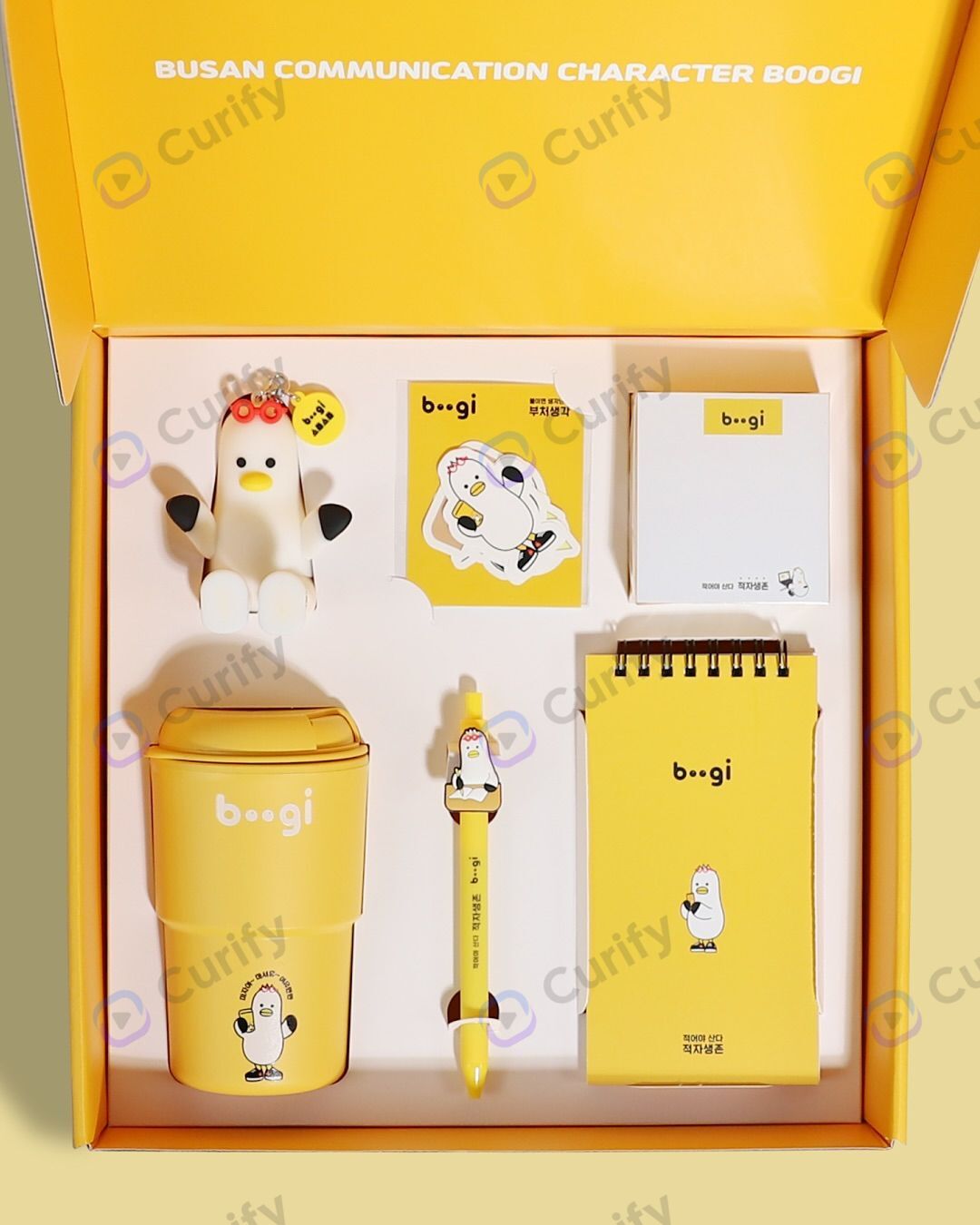
Premium gift box mockups command 3-5x the retail price of equivalent single SKUs. The Curify template generates the full unboxing-ready set: branded outer box + notebook + postcard + pin + hangtag in coordinated palette.
Open the Gift Box + Stationery Mockup template →
Why this composition is so commercially valuable: a Busan Boogi Duck gift box retails $35-50 on Etsy vs $4 for a single sticker. The perceived-value lift comes from the unboxing experience — multiple SKUs in coordinated palette read as an intentional collection rather than a one-off product.
Use case map: kids brand launches, museum/gift-shop premium SKUs (KD 45/110 "museum merchandise" is a sister opportunity), Q4 holiday packs, corporate gift packs.
Pattern 4: Full brand VI visual pack — entire identity system
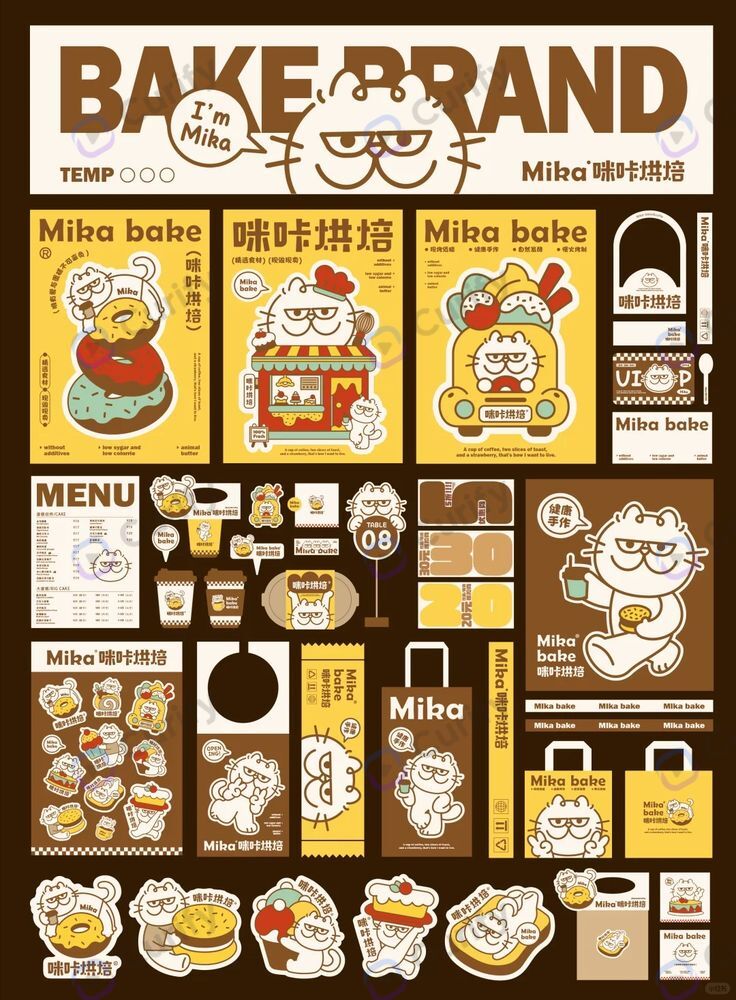
When you're launching a NEW brand (not just a new SKU), the Curify Brand VI template renders the complete Day-1 deck: logo + secondary mark + packaging applications + collateral + signage + digital. One prompt produces the entire system.
Open the Brand VI Full Visual Pack template →
Why this scales for brand strategy work: an early-stage agency or in-house brand strategist would normally build a Day-1 deck over 4-6 weeks. The template doesn't replace that judgment work — it accelerates the visual mockup step so the strategist can show 3 directional options to stakeholders in the first review meeting instead of the third.
Use case map: F&B brand launches, café/bakery openings, corporate event identity systems, kickstarter campaign visual stories.
Prompt phrases that move the dial on AI packaging
Material vocabulary that produces print-ready output: "kraft paper texture" (eco-conscious premium), "matte foil-stamped logo on dark navy" (luxury / Whole Foods tier), "clear glass jar with paper label and twine" (artisan / farm-to-table), "glossy white plastic squeeze tube" (mass-market CPG).
Composition vocabulary: "front-of-pack, side-of-pack, and ¾ rotation, three angles in unified lighting" (the magic prompt for usable mockup sets vs. a single hero shot), "flat-lay top-down with shadow" (Instagram-ready), "in-context lifestyle shot in kitchen / store shelf" (sales deck-ready).
Pitfalls to avoid: generic "AI-generated packaging" produces stock-photo output. Always specify the substrate (paper / plastic / glass / metal) AND the finish (matte / glossy / foil / kraft) AND the brand tier. Models also tend toward gradient backgrounds — ask for "clean white background, isolated product mockup" for deck-ready output.
Resolution cue: ask for "3000×3000 pixel, print-ready resolution". Don't accept lower than 2048×2048 — pixelates on retina displays during pitches.
Where AI packaging design still needs a human
Label compliance is yours. Templates render visual layout, not validated FDA / regulatory marks. Treat AI output as a mockup, not a printable final pack.
Print color shifts. Pantone 186 red on screen ships as desaturated brick on uncoated kraft. Order a $50 short-run sample before scaling.
Multi-SKU palette drift. Render the full series in one prompt session — separate sessions drift even within the same template.
Trademark risk. AI-generated 'Hello Kitty packaging' is a takedown trap. The IP templates work because you specify original IP (Blessing Dragon, Boogi Duck) and the template generates derivative-original characters.
Mockup ≠ unboxing. A perfect render doesn't tell you how the foam holds the pin or how the box opens. Prototype the physical experience with a 25-unit sample run ($200-400 at Sticker Mule or Pakible) before scaling.
AI packaging tools compared
Curify — template-based; ships packaging grammar (label hierarchy, ingredient strip, multi-angle composition) baked into 4 template families. Best for operators producing 5-50+ SKU mockups per month with style coherence needs.
MidJourney / DALL·E / Stable Diffusion — beautiful single-image output but no multi-angle composition or label structure. Best for one-off hero shots, not usable mockup sets.
Adobe Firefly inside Photoshop — best as a finishing tool on top of generated mockups, not for from-scratch generation.
Smartmockups / Placeit — putting your existing design into a mockup scene; not generative output.
For 10-100 SKU mockups/month with style coherence requirements, template-based generation wins on speed + consistency.
Two paths for packaging design teams
Path A — DIY with Curify templates. Solo founders, early-stage brand owners, in-house design teams scaling past their first 10 SKUs. Use the 4 templates via /nano-template, then ship to your packaging vendor for dieline + production.
Path B — Operator licensing for catalog-scale shops. Brand agencies, packaging studios, large POD operators producing 50+ SKU mockups per month. Licenses as API + custom-template authoring. Best when you're hitting the SKU-velocity wall most studios hit past 50 SKUs.
For the broader merchandise vertical including sticker design + die-cut production, see the AI Sticker Design Guide and Die-Cut Sticker Design sibling posts. Operator-side persona: /use-cases/for-merch-operators.
Ship your first packaging mockup this week
Pick the highest-priority SKU in your designer queue and run it through the matching template — 5-15 minutes from prompt to deck-ready mockup. For full brand launches, the Brand VI Pack produces a Day-1 directional deck in under an hour.
Reach out via /contact for operator licensing or custom template work.
Popular Template Examples
Explore our most popular Nano Banana prompt templates to see what's possible:
One image is a sample. A product line needs the whole set.
Every Curify template runs in bulk. Send the list — SKUs, words, characters, teams, scenes — and we return the full set generated against one locked visual direction, so the line reads as a collection instead of forty unrelated images.
- Works on any template, not a special few — the same prompt structure applied across your whole list.
- One locked visual direction across the set, so a 40-design line stays on-brand end to end.
- Production-ready output where the format calls for it — die-cut paths, dielines, print resolution.
Take the next step
Putting what you read into practice.
Browse related topics
More templates and prompts in these areas.
Related Articles
merch-pod
AI Makeover Templates: 4 Patterns from Selfie to Style Transformation
Designer Toy IP Merchandise Design: The 2026 AI Production Workflow