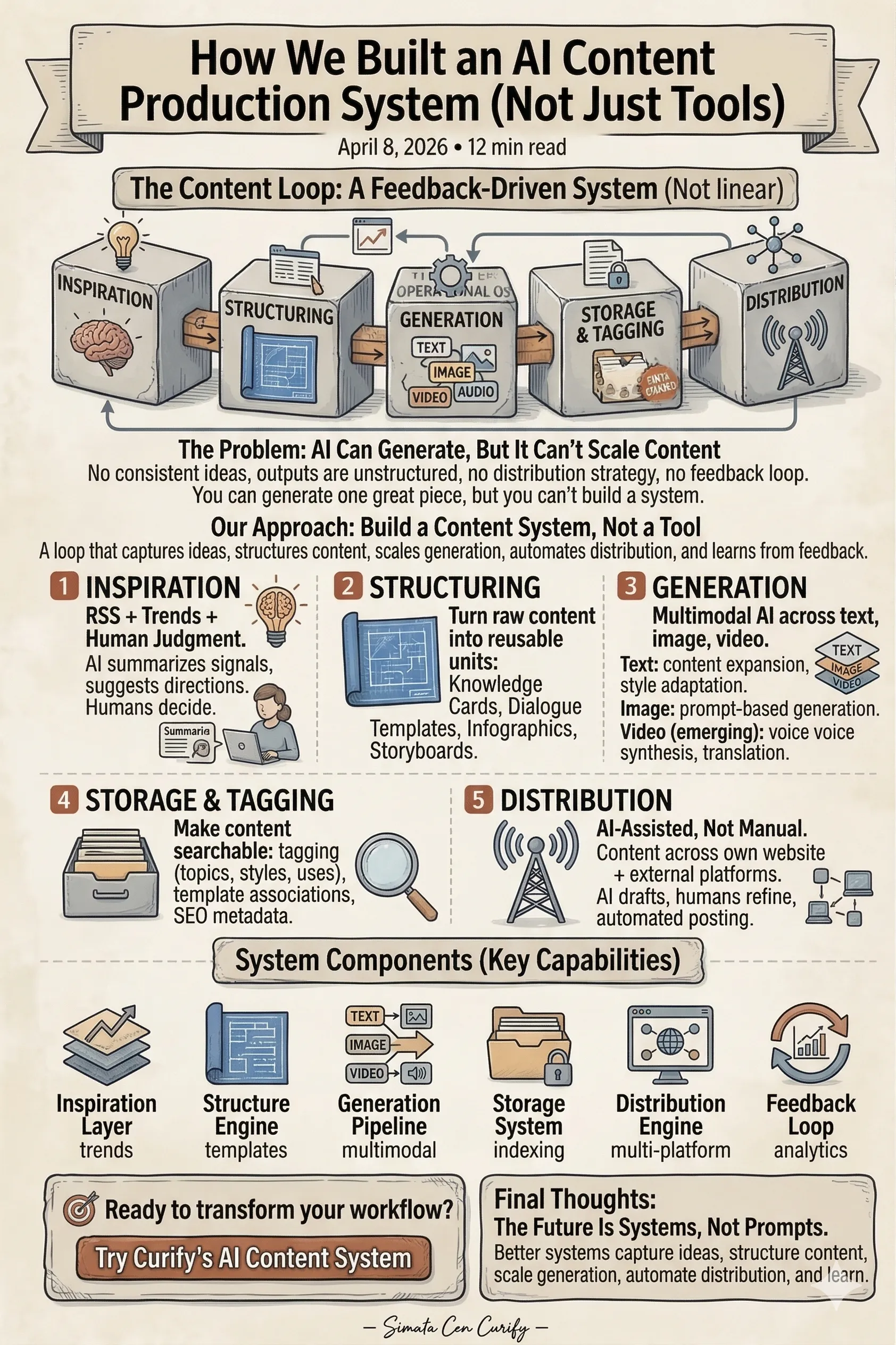
AI Faceless Channel Pipeline: The Actual Workflow Behind 5-10 Videos a Week
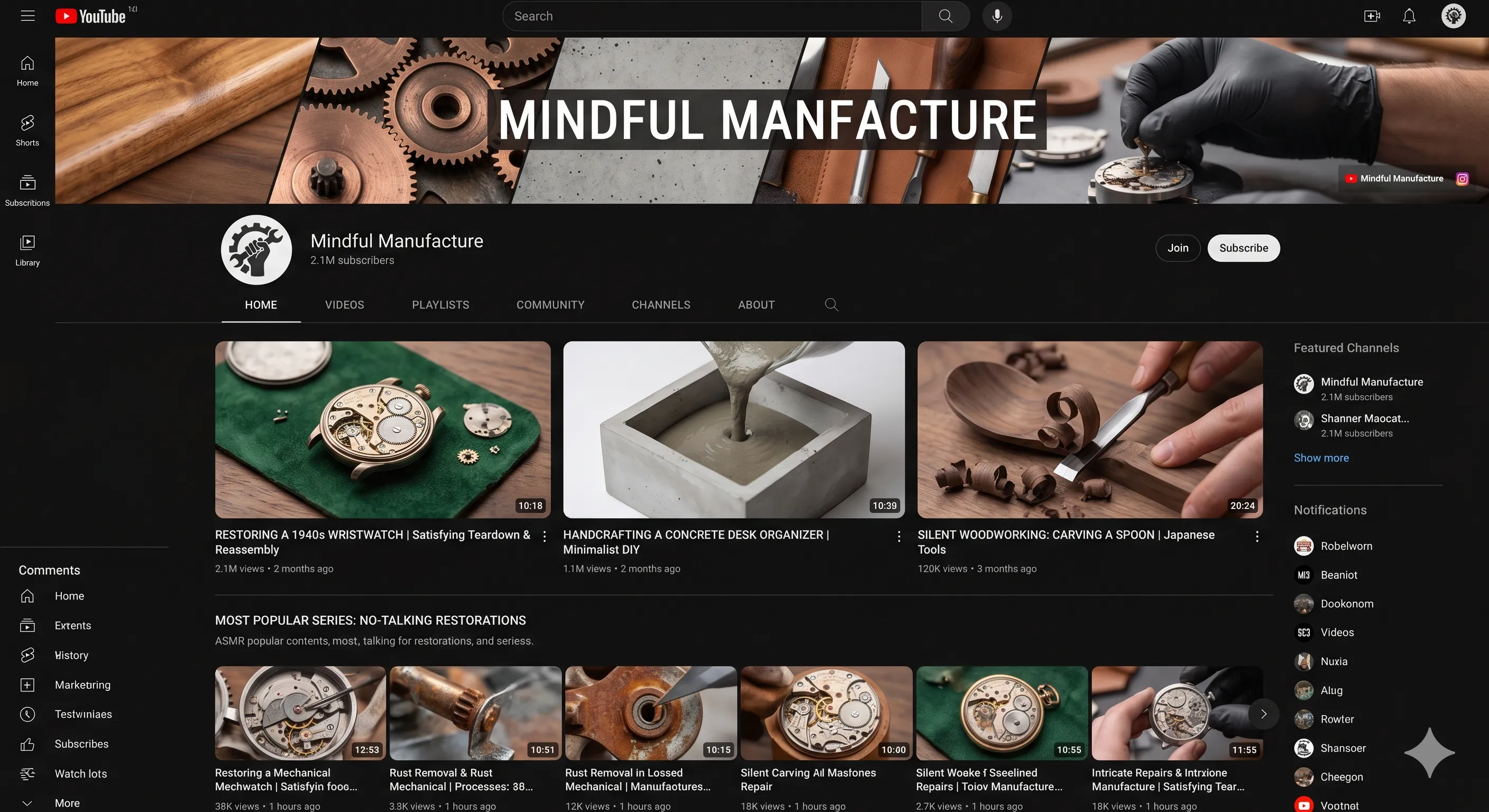
What Is an AI Faceless Channel Pipeline?
A faceless AI channel is a YouTube, TikTok, or Shorts channel where the creator never appears on camera. The video is built from three production tracks running in parallel: **Visual track**: Image or short-clip generation pinned to a brand-consistent style. Same color palette, same character art direction, same composition vocabulary across every video. Without this constraint, the channel reads as "different AI tools" rather than a coherent brand. **Audio track**: A voiceover, either a cloned synthetic voice or a stock voice. The voice does not change between videos — it is the channel's identity in the absence of a face. **Pacing track**: The edit. Cuts, b-roll insertion, on-screen text, music. This is what separates faceless channels that retain viewers from the ones that get scrolled past. The pipeline is not a single tool. It is the orchestration of three production tracks under one consistent brand. The faceless channels that work are operations, not prompts.
🚀Why "Just Use AI" Fails
Most faceless-channel attempts produce one good video, then degrade. The failure modes are predictable: **Visual drift**: Prompted images vary across videos. By video 10, the channel has no recognizable look. Solution: use a Nano Banana template (or equivalent locked-style generator), not free-form prompting. **Voice fatigue**: Stock voices sound robotic after multiple videos in the same listener's ear. Cloned voices with weak training data degrade in long-form. Solution: invest in a high-quality voice clone or hire a single voice actor for the channel's first 50 videos. **Script sameness**: AI-generated scripts gravitate to the same structure ("Did you know that... Studies show... In conclusion..."). Viewers tune out. Solution: a small library of narrative patterns (problem-twist-payoff, list-with-stakes, before-and-after) the script generator rotates through. **No scheduling discipline**: One-shot videos do not build an audience. Solution: queue-and-publish automation tied to a content calendar, not human energy.
Interactive Pipeline Workflow
Step 1: Lock the Visual Identity
Before producing any video, define the channel's visual brand. Color palette (3-5 colors), composition vocabulary (centered subjects vs off-center, wide vs close), illustration style (cel-shaded, 3D-render, watercolor, photoreal), and recurring visual motifs (a mascot, a recurring frame element, a signature transition). Lock these in a Nano Banana template. The template becomes the channel's visual contract — every generated image conforms. Without this step, the channel produces "AI-style" content that looks like a thousand other channels. Gold standard: a single template that produces hero shots, transition cards, and b-roll variations from one parameter — the topic of the video. Variant templates branch off the main one for special formats (interviews, list videos, narrative stories).
⚡Five-Component Pipeline
Step 1: Lock the Visual Identity
Before producing any video, define the channel's visual brand. Color palette (3-5 colors), composition vocabulary (centered subjects vs off-center, wide vs close), illustration style (cel-shaded, 3D-render, watercolor, photoreal), and recurring visual motifs (a mascot, a recurring frame element, a signature transition). Lock these in a Nano Banana template. The template becomes the channel's visual contract — every generated image conforms. Without this step, the channel produces "AI-style" content that looks like a thousand other channels. Gold standard: a single template that produces hero shots, transition cards, and b-roll variations from one parameter — the topic of the video. Variant templates branch off the main one for special formats (interviews, list videos, narrative stories).
Step 2: Generate Scripts From Narrative Patterns
A faceless channel's voice — what makes it feel like a person, not a content farm — comes from script structure. Build a library of 5-10 narrative patterns the script generator chooses from: **Problem-twist-payoff**: 30s problem setup, 30s unexpected twist, the rest is payoff. **List with stakes**: "5 X that Y" but every item escalates in consequence. **Before-and-after montage**: Two states, the bridge between them is the video. **Quiet expert**: Calm declarative delivery on a topic the viewer assumed was simple, revealing it is not. **Hot take**: Strong opinion, defended, controversial conclusion. Assign one pattern per video. The script generator fills in the topic, hook, and payoff. Rotate patterns so the channel does not become predictable.
Step 3: Voice Cloning That Survives Long-Form
The voice clone has to sound natural at video length, not just sentence length. Two non-negotiables: **Training data quality**: 30-60 minutes of clean source audio in the target speaking style. Conversational tone if the channel is casual, narrative tone if explanatory. Clean means: single speaker, no background music, no compression artifacts, varied sentence structure. ElevenLabs Instant Voice will give you a usable clone from 1 minute; the result degrades after 90 seconds of generated audio. Their Professional Voice Cloning takes hours of source but holds quality across full videos. **Prosody control**: Long-form needs pauses, emphasis shifts, and pace variation. F5-TTS and ElevenLabs both support SSML or marker-based prosody. Hand-author this for the first 10 videos to teach yourself what your voice clone does well — once you know, you can prompt for it. F5-TTS open-source is competitive on quality for technical channels (narration, explainer) but weak on emotional delivery. ElevenLabs is more expensive but handles broader speaking ranges.
Step 4: Assembly and Pacing
The script and voice are inputs. The edit is what keeps viewers watching. **Cuts every 2-4 seconds for Shorts/TikTok**: The pacing is the format. A faceless Short with 8-second static image segments will not retain. **Cuts every 5-10 seconds for YouTube long-form**: Slower pacing works because the audience self-selected for length. Still, no segment over 15 seconds without a visual change. **On-screen text for the hook**: First 3 seconds need a text overlay restating the hook. Faceless channels lose viewers who would have stayed if they had read what the video was about. Burned-in text is the cheapest insurance. **Music bed**: A consistent music track across videos cements brand identity. Royalty-free libraries (Epidemic, Artlist, YouTube Audio Library) are fine — pick three tracks and rotate. Switching music every video reads as "different channel".
Step 5: Schedule and Publish on Cadence
A 5-10 video weekly cadence requires queue-and-publish, not one-off uploads. Set up a posting calendar with at least two weeks of buffer. **Buffer strategy**: Generate a batch every 2 weeks; the next 14 days of videos are scheduled before any are published. Quality stays consistent because batches are produced under the same constraints. **Cross-posting**: One long-form YouTube video can yield 5-10 Shorts/TikToks if the original was scripted for repurposing. Cut highlight segments under 60 seconds and reformat to vertical at production time, not as an afterthought. **Publishing automation**: Buffer, Later, Hootsuite for cross-platform scheduling. YouTube native scheduling for long-form. The discipline that matters is calendar adherence; the specific tool barely does.
🛠️Pipeline Tools Worth Standardizing On
**Visual generation**: Curify Nano Banana for brand-locked image generation, with templates that codify the channel's art direction. Midjourney for one-off custom images that fall outside the template. **Script generation**: Claude, GPT-4o for narrative-pattern script generation. Maintain a system prompt that enforces the channel's narrative library. **Voice synthesis**: ElevenLabs Professional Voice Cloning for the channel's flagship voice. F5-TTS as the budget alternative for technical/explainer channels. Avoid free-tier voices for production work. **Video assembly**: Descript for AI-assisted editing if you want fast turnaround at modest quality. DaVinci Resolve or Premiere Pro for full control. CapCut for Shorts and TikTok-native pacing. **Scheduling**: Buffer, Later, Metricool for cross-platform automation. YouTube native scheduling for long-form-only channels. **Automation glue**: Make.com (formerly Integromat), Zapier, or a custom script orchestrating the pipeline end-to-end. The automation layer is where solo operators differ from agencies.
🛠️ Complete Tools Comparison
| Tool | Description | Price | Integration |
|---|---|---|---|
Nano Banana | AI visual generation with consistent branding | Free tier | ✅ Native |
Midjourney | High-quality image generation | $10-30/mo | ⚠️ API only |
DALL-E 3 | OpenAI image generation | $20/mo | ⚠️ API only |
💡 Curify Recommendation
While individual tools work, Curify's integrated ecosystem eliminates tool-switching overhead and provides seamless workflow automation. Start with Nano Banana for visuals, add narrative tools for scripting, then integrate TTS and distribution for complete pipeline automation.
⭐How Curify Fits Into the Pipeline
Curify supplies the brand-locked visual generation layer — the part of the pipeline that fails first when faceless channels scale. Nano Banana templates pin the channel's art direction so every image conforms across videos, weeks, and operators. For channels with recurring characters (story-based animation, mascot-led explainers), Curify's character templates produce consistent renders across topic variations — same character, different scene. This is the hardest part of faceless-channel art direction; templating it removes the per-video drift. The rest of the pipeline (script, voice, edit, schedule) chains off the visual output. Curify is the foundation, not the entire stack — the platform is opinionated about the visual layer because that is where most faceless channels fail.
💰Monetization Realities
Faceless channels monetize on the same routes as faced channels but with different friction: **Ad revenue (AdSense, TikTok Creator Fund)**: Available once you hit thresholds. AdSense pays per 1,000 views; the rate depends on niche. Finance, tech, and business niches earn 3-5× general-interest CPMs. Required: 1,000 subs and 4,000 watch hours for YouTube; 10,000 followers and 100,000 views in 30 days for TikTok. **Affiliate**: Faceless channels excel here — the recommendation feels objective because there is no host face attached to the pitch. Niche-aligned affiliate programs (Amazon Associates, ShareASale, Impact) work better than generic ones. **Sponsorships**: Harder for faceless channels because sponsors want a recognizable host. Possible but requires building channel authority first (200K+ subscribers, consistent engagement). **Products and courses**: The strongest route for faceless channels. The channel teaches the topic; the product extends what was taught. Margins are higher than ad revenue and the audience is pre-qualified.
🎯Channels Worth Studying
Three faceless channel archetypes that work: **Explanatory technical**: A locked visual style (often whiteboard or diagram-driven), calm narrator voice, scripts with clear stakes. Examples: explainer channels around economics, science, history. The faceless format works because the credibility is in the content, not the personality. **Story-based animation**: Recurring characters across videos, locked art direction, voice acting (cloned or human) per character. Examples: bedtime-story channels, animated short channels. Hard to start because the character generation has to be consistent. **List and ranking**: Quick-cut listicles with a strong hook, b-roll plus on-screen text. Examples: "top 10" channels in any niche. Easiest to start because the structure is rigid; hardest to differentiate from the dozens of similar channels. The channels that fail are usually the fourth archetype: "random AI content" — no locked visual style, no consistent voice, no recurring format. They produce volume but no retention.
📊Metrics That Predict Channel Survival
Vanity metrics (views, likes) are not the leading indicator. Track these from week one: **Average view duration**: Below 30% of video length and the algorithm will not surface the channel. Target 50%+ for long-form, 70%+ for Shorts. **Click-through rate on thumbnails**: Below 4% is weak. Strong faceless channels hit 8-12%. Thumbnail is the single highest-leverage edit point. **Subscriber-to-view ratio**: If a video gets 10K views and 0 new subs, the channel is not converting viewers into followers — content quality is fine but the hook for subscription is missing. **Posting consistency**: The single metric that predicts long-term survival. Channels that publish every week for 6 months hit critical mass; channels that go quiet for 2 weeks rarely recover.
📈Scaling From One Channel to a Network
Once one channel is profitable, the operational pattern is portable. A faceless-channel network — 3-10 channels in adjacent niches — is mostly an exercise in template re-skinning. **Template re-skinning**: The Nano Banana template, the narrative-pattern library, the voice clone are all swappable per channel. The pipeline stays the same. **Cross-channel topic re-use**: A topic researched once can serve 2-3 channels with different framings (e.g. a finance topic can run on a personal-finance channel, a tech-investing channel, and a business-news channel). **Operating cost per channel**: Marginal cost of adding a channel is hours of operator time per week, not the API costs. Hire a part-time editor when the third channel is launching; do not try to scale beyond that solo.
🎉Build the Pipeline Before the First Video
The pattern that works for faceless channels is the opposite of how most creators start. Build the pipeline first — visual template, script library, voice clone, schedule — and then produce. The first 10 videos are testing the pipeline, not building an audience. The ceiling for a faceless channel is not creative; it is operational. The channels that scale are the ones with infrastructure. Start with one channel, lock the pipeline, then consider scaling to a network only when the first one is running on autopilot.
Take the next step
Putting what you read into practice.
Browse related topics
More templates and prompts in these areas.
Related Articles
Creator Tools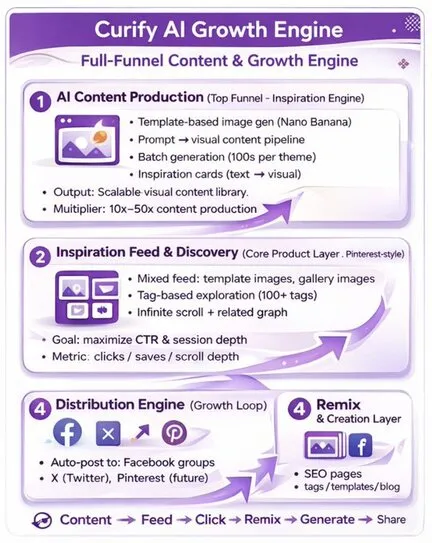
The Curify AI Growth Engine: Transforming Content Creation for UGC Creators and Marketers
The Curify Nano Banana Prompt Library: 4,000+ Tested Image Prompts