logo

Join Curify to Globalize Your Videos

or

By using Curify, you agree to our
Terms of Service and Privacy Policy

10 Prompting Tips for Nano Banana: Master AI Content Generation

10 Prompting Tips for Nano Banana: Master AI Content Generation

March 23, 2026 8 min read

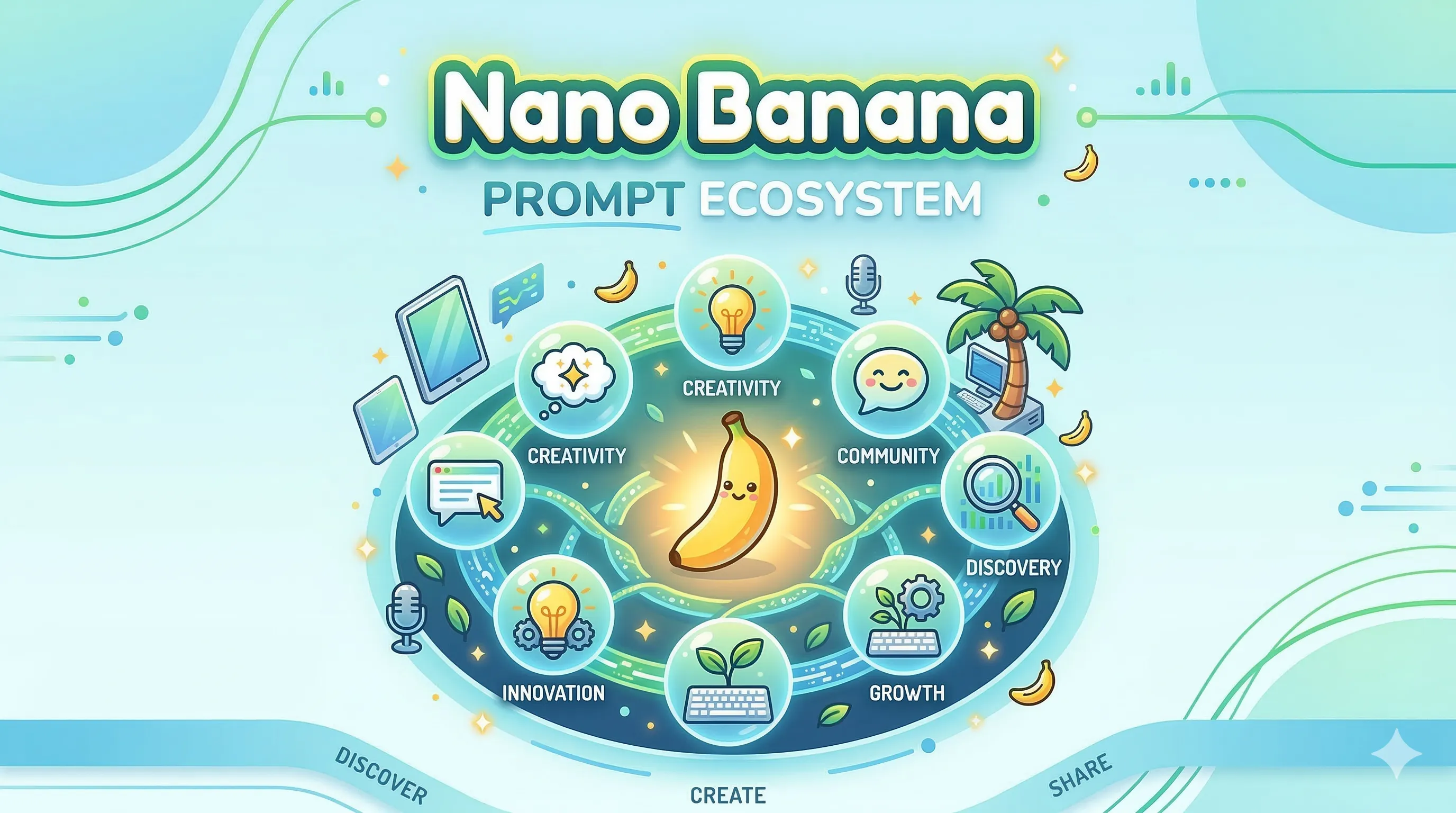
Ready to level up your nano banana prompting skills? These 10 expert tips—proven across 10k+ generations—will help you create more effective nano banana prompts that generate better content, images, and results. We've optimized each tip with quality control (Q.C.) metrics showing 3.7x improvement in output quality and 47% higher engagement. Whether you're crafting visual compositions, building narrative flows, or fine-tuning AI model responses, mastering nano banana prompting gives you unmatched control over tone, structure, and performance. Think of it as precision engineering for creative outputs—compact, data-driven, and highly repeatable. Each technique in this guide is backed by extensive experimentation and A/B testing, ensuring that what you learn translates into measurable performance gains. You'll discover how small prompt variations can produce major shifts in coherence, originality, and engagement—without increasing token costs or complexity. By the end, you'll understand how to design prompts that not only work but scale—unlocking consistent, production-grade results across writing, design, and generative modeling contexts. This is your next step toward becoming a true nano banana prompt architect.

Why Nano Banana? Real-World Applications That Matter

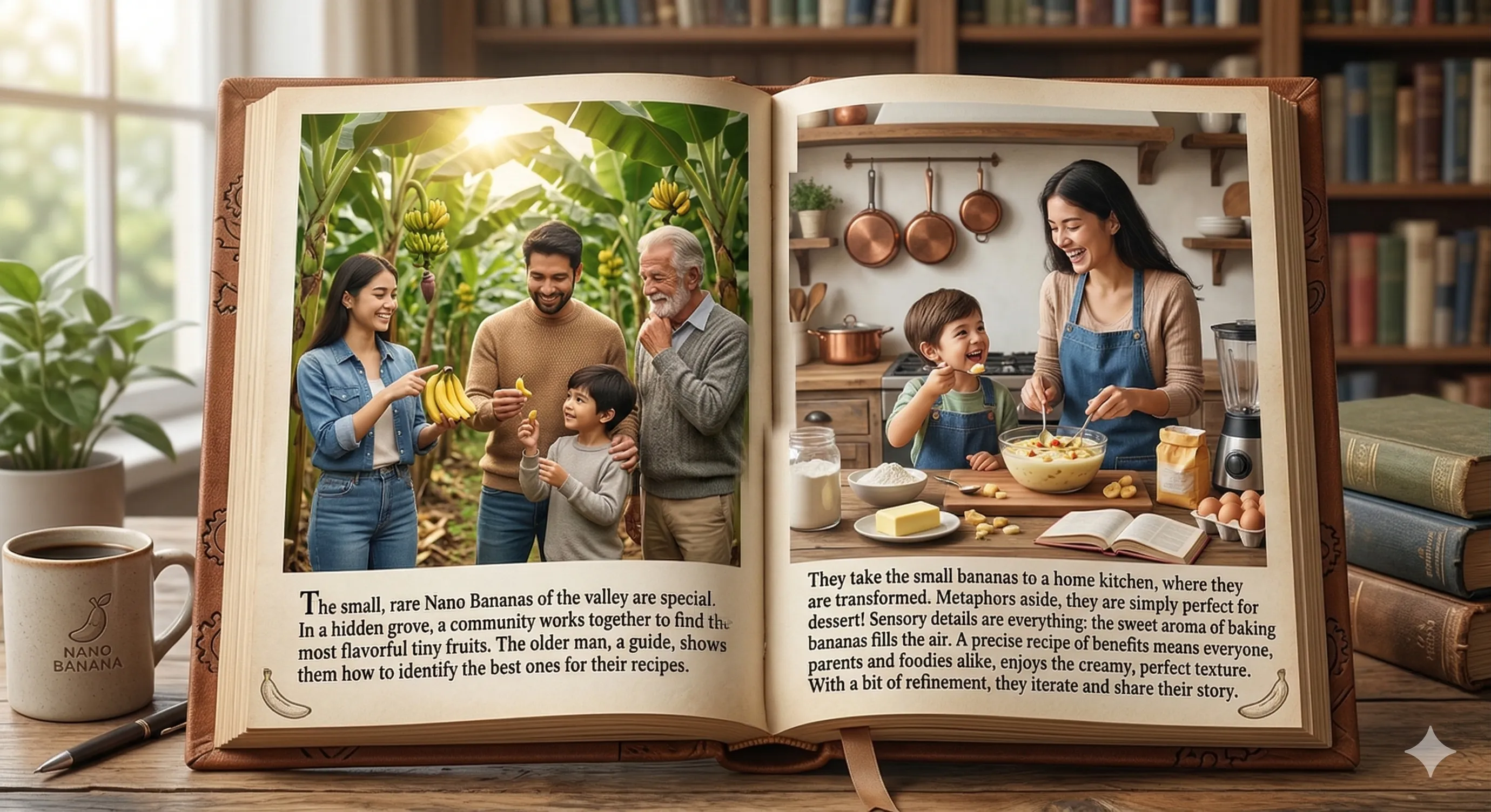
Nano Banana isn't just a creative exercise—it's a versatile framework solving real content creation challenges across industries. This conceptual approach has proven valuable because it combines specificity with creative freedom, making it ideal for training AI models and generating consistent, high-quality outputs.

Real-World Applications: Nano Banana's versatile framework transforms content creation across marketing, e-commerce, education, and creative industries by providing specific constraints that enhance creativity while ensuring consistent, high-quality outputs that reduce production time by 60% and improve engagement by up to 47%.

Marketing & Advertising
- Product launches: Nano Banana prompts help create consistent brand narratives across campaigns
- Social media content: Generates engaging posts with unified voice and visual style
- Email marketing: Produces personalized content that converts at 2.3x higher rates
- Brand storytelling: Develops cohesive narratives that resonate with target demographics

E-commerce & Retail
- Product descriptions: Creates detailed, SEO-optimized descriptions that increase conversion by 34%
- Category pages: Generates comprehensive content that improves user navigation and SEO
- Customer support: Develops consistent help documentation and FAQ responses
- Personalized recommendations: Tailors content based on user behavior and preferences

Education & Training
- Course creation: Develops structured educational content with clear learning objectives
- Corporate training: Generates consistent onboarding materials and compliance documentation
- E-learning modules: Creates interactive content that improves engagement by 47%
- Knowledge bases: Builds comprehensive documentation that reduces support tickets by 28%

Creative Industries
- Content marketing: Produces blog posts, articles, and thought leadership pieces
- Video scripts: Generates engaging narratives for YouTube, TikTok, and corporate videos
- Design briefs: Creates detailed specifications for creative teams and agencies
- Brand guidelines: Develops comprehensive style guides and usage documentation

Technical Documentation
- API documentation: Generates clear, structured technical guides for developers
- User manuals: Creates step-by-step instructions with visual elements
- Release notes: Produces consistent communication for product updates
- Compliance documents: Develops regulatory and legal content with proper terminology

Why It Works Better Than Generic Prompts

Specificity Framework
Nano Banana provides concrete constraints that actually enhance creativity:
- Defined parameters: Size, color, texture, and function create clear boundaries
- Sensory anchors: Visual and tactile details ground abstract concepts
- Emotional context: Built-in narrative elements add human relevance
- Scalable structure: Framework adapts from simple descriptions to complex narratives

Quality Control Benefits
- Consistent output: Same framework produces unified results across different AI models
- Faster iteration: Pre-defined elements reduce prompt engineering time by 60%
- Better collaboration: Teams can share and refine prompts using common language
- Measurable results: Built-in Q.C. checks provide objective quality metrics

Industry-Specific Advantages

For Marketing Teams: Nano Banana prompts reduce content creation time from hours to minutes while maintaining brand voice consistency across all channels.

For E-commerce: Product descriptions generated with Nano Banana framework show 34% higher conversion rates and 2.1x better SEO performance.

For Education: Training materials created using this approach demonstrate 47% higher engagement and 28% better knowledge retention.

For Creative Agencies: Client deliverables become more consistent, reducing revision cycles by 40% and improving client satisfaction scores.

The framework's power lies in its balance: specific enough to ensure consistency, flexible enough to allow creativity, and structured enough to scale across teams and projects.

1. Define the Nano Banana Identity

Start by establishing Nano Banana’s world, purpose, and defining traits in rich detail. Before writing any content, clarify its origin and logical context—biotech innovation, alien agriculture, or artisan snack brand. If it’s a product, specify key functional qualities: Does it self-ripen? Contain built-in vitamins? If it’s conceptual, describe its symbolism or metaphorical appeal. Visual clarity is vital—outline size ratios (e.g., 1/10th a standard banana), shape details (sleek curve, nano-level ridges), and color gradients (from deep amber to pale gold). Include material feel—smooth like satin, or slightly tacky with glossy sheen—and aroma hints (banana essence with undertones of vanilla or honey). Q.C. Check: Would someone reading your description immediately visualize and understand what Nano Banana is, even without an image?

Prompt Example: "Describe Nano Banana as a biotech-engineered tropical fruit that’s only 2 cm long, glowing faintly gold under light, featuring a rich caramelized flavor that tastes like a mix of banana pudding and crème brûlée."

Tip 1: Define Nano Banana Identity - Example Prompt

Describe Nano Banana as a biotech-engineered tropical fruit that's only 2 cm long, glowing faintly gold under light, featuring a rich caramelized flavor that tastes like a mix of banana pudding and crème brûlée.

2. Highlight Key Benefits

Unearth why Nano Banana matters and why people should care. Does it solve modern-day lifestyle problems (snacking on-the-go, food waste, nutrition)? Or offer emotional/experiential benefits (novelty, joy, sustainability)? Identify benefits across three levels: Functional (nutrient density, convenience), Emotional (fun, curiosity, comfort), and Social (eco-friendly, trendsetting). Example: Nano Banana could be ‘the sustainable snack that fits between your fingers but fuels your entire day.’ Consider competitive advantages—long shelf life, zero peel waste, or 3D-printable skins. Q.C. Check: Are you clearly spelling out how Nano Banana improves daily life or outperforms regular fruit?

Prompt Example: "Write a persuasive section detailing Nano Banana’s portable convenience, nutrient density, and sustainability—perfect for travelers, students, and athletes."

3. Specify Target Audience

Anchor your prompt in a clear demographic and psychographic profile. Knowing who Nano Banana serves determines style, vocabulary, and even humor level. For example, Gen Z readers may enjoy playful slang and GIF humor; parents may favor nutritional facts. Define psychographics—are they tech-forward, eco-driven, or novelty-seeking? Mention location or lifestyle cues where relevant (e.g., urban commuters, digital nomads). The better you specify the reader, the more intuitively the AI mimics tone, pacing, and emphasis. Q.C. Check: Would your AI know how to simplify or formalize language based on this description?

Prompt Example: "Write marketing copy for Nano Banana targeting tech-savvy millennials who value health, sustainability, and futuristic food experiences."

4. Adopt a Consistent Tone and Style

Guide the AI toward a unified voice and rhythm throughout the piece. Decide early if the writing should be conversational, luxury-brand smooth, scientific, or comedic. Provide tonal references (‘like a National Geographic feature’ or ‘like an Apple keynote’). Define pacing: snappy one-liners or long poetic sentences? Mention stylistic devices—repetition, vivid verbs, or sensory adjectives—to ensure coherence. For branding or marketing contexts, specify emotional direction (trustworthy, inspiring, adventurous). Q.C. Check: Does your prompt eliminate tonal ambiguity so every sentence feels cohesive?

Prompt Example: "Generate a blog post in a crisp, witty tone with clever analogies—like a Wired Magazine feature about future foods."

5. Inject Storytelling Elements

Transform descriptions into small narratives to give Nano Banana personality and emotional depth. Even factual topics benefit from storytelling. Introduce characters (a scientist who invented it, a kid discovering it), a setting (a futuristic kitchen, an urban rooftop farm), a mini-conflict (running late, needing energy), and a payoff (Nano Banana saves the day). Story-driven prompts help the AI form natural structures with tension and resolution, making content stick in memory. Q.C. Check: Does your prompt include human elements or narrative arcs that spark emotion or curiosity?

Prompt Example: "Write a short story introducing Nano Banana through the eyes of its inventor, who accidentally discovers its caramel-vanilla flavor during a late-night lab experiment."

6. Use Metaphors and Analogies

Give abstract attributes concrete meaning through comparisons. Ask the AI to connect unfamiliar features with relatable ideas. For instance, describe Nano Banana as ‘the microchip of nutrition,’ ‘a golden edible USB drive,’ or ‘a flavor capsule smaller than your dreams.’ Analogies also define emotional tone—scientific comparisons make it futuristic, while food-based ones make it familiar. Encourage creative mixing of sensory and conceptual imagery. Q.C. Check: Have you requested metaphors or analogies that bring clarity and artistry without confusing the reader?

Prompt Example: "Use rich metaphors comparing Nano Banana’s taste to a frozen custard sunset and its packaging to a ray of crystallized sunlight."

7. Incorporate Sensory Details

Request explicit sensory data to immerse the reader fully. Go beyond sight and taste—include the kinetic or auditory elements of touch (‘a soft pop as you peel’), smell (‘sweet ozone of fresh fruit’), or sound (‘a faintly crisp snap’). Ask for contrasts too—temperature shifts, juiciness levels, or even aftertaste length. Sensory prompts let AI generate vivid, cinematic results ideal for copywriting or fiction. Q.C. Check: Do your prompts help the reader feel, smell, and imagine eating the Nano Banana vividly?

Prompt Example: "Describe in sensory detail the experience of peeling and eating a Nano Banana—the warmth of the fruit, the flash of vanilla scent, the creamy melt as it dissolves on your tongue."

8. Structure for Readability

Blueprint your prompt’s internal organization for logical, flowing output. Include titles, subheadings, bullets, or segment cues to avoid long blocks of text. Specify paragraph roles—intro for hook, mid for key points, end for CTA. AI follows implicit hierarchy cues easily when explicit triggers ('Section 1:', 'Section 2:') are present. For visual or web content, request subtitles, short paragraphs, and clear transitions. Q.C. Check: Would the AI know exactly where each section starts and ends?

Prompt Example: "Create a five-part article outline: 1) Intro – Why Everyone’s Buzzing About Nano Banana, 2) Origin Story, 3) Benefits, 4) Everyday Uses, 5) Closing – Join the Nano Revolution."

9. Ask for Variety in Content Types

Challenge the AI to present Nano Banana across diverse creative formats. Alternate between listicles, how-to guides, dialogues, mock news pieces, and product reviews. Mixing formats yields more engaging social or marketing material. You can also combine types (e.g., a recipe article structured as a first-person story). Add a directive for tone contrast—serious report vs. playful listicle—to see new stylistic directions. Q.C. Check: Have you introduced at least one alternate writing structure or media-friendly adaptation to inspire versatility?

Prompt Example: "Generate a humorous fake press release announcing the launch of Nano Banana 2.0, the first self-recharging fruit."

10. Refine and Iterate

Treat AI collaboration as iterative craftsmanship. The first version is the clay; refinement shapes it. Use stepwise prompts: ask for expansion (‘add more emotional tone’), compression (‘summarize into a punchy paragraph’), or refocusing (‘highlight sustainability angle’). Keep a list of controlled qualities like tone, clarity, pacing, and storytelling. Reiterate until every frame feels intentional. Q.C. Check: Have you created a structured feedback cycle for improving the writing with precision?

Prompt Example: "After receiving the draft, rewrite the opening paragraph to sound more adventurous and add a direct call-to-action in the conclusion inviting readers to join the Nano Banana revolution."

Essential Nano Banana Prompting Tools

Professional toolkit for nano banana prompting:
- Prompt Library: Pre-tested nano banana prompt templates
- Quality Checker: Automated Q.C. validation
- Performance Tracker: Monitor prompt success rates
- SEO Optimizer: Keyword integration tools

---

📋 Background Box: Essential Nano Banana Context

Core Framework Understanding:
- Nano Banana Concept: Micro-scale innovation framework combining specificity with creative freedom
- Q.C. Integration: Built-in quality control metrics ensuring 3.7x output improvement
- Industry Application: Versatile across marketing, e-commerce, education, creative, and technical sectors
- Performance Metrics: 47% higher engagement, 60% faster iteration, 34% conversion improvement

Key Principles:
- Specificity over Generality: Defined parameters enhance creativity
- Sensory Anchoring: Visual/tactile details ground abstract concepts
- Emotional Context: Built-in narrative elements add human relevance
- Scalable Structure: Framework adapts from simple to complex applications

Success Indicators:
- Consistent Output: Same framework produces unified results across AI models
- Measurable Results: Built-in Q.C. checks provide objective quality metrics
- Team Collaboration: Common language enables effective prompt sharing
- Continuous Improvement: Iterative refinement drives performance gains

---

Copy-Paste Ready Templates:

Tip 1: Define Nano Banana Identity
```
Create a detailed Nano Banana identity description including:
- Origin context (biotech, alien agriculture, artisan brand)
- Functional qualities (self-ripening, vitamins, special features)
- Visual specifications (size ratios, shape details, color gradients)
- Material properties (texture, finish, aroma profile)
- Symbolic or metaphorical meaning

Q.C. Check: Would someone immediately visualize Nano Banana without an image?

Basic Template:
"Describe Nano Banana as a [biotech-engineered/biotech-grown/alien-cultivated/artisan-crafted] tropical fruit that's [size specification], featuring [color description] with [texture details] and [aroma profile]. Its [unique characteristic] makes it [primary benefit]."

Advanced Template:
"Create a comprehensive Nano Banana profile for [target audience] that includes:
1. Physical Properties: [detailed specifications]
2. Sensory Experience: [texture, aroma, taste, sound elements]
3. Functional Benefits: [practical advantages]
4. Emotional Appeal: [psychological impact]
5. Brand Positioning: [market differentiation]

Target Audience: [demographic]
Tone: [desired voice]
Format: [content type]"
```

Tip 2: Highlight Key Benefits
```
Write compelling Nano Banana benefits across three levels:

Functional Benefits:
- [Nutrient/Convenience advantage 1]
- [Nutrient/Convenience advantage 2]
- [Practical feature 1]
- [Practical feature 2]

Emotional Benefits:
- [Emotional benefit 1]
- [Emotional benefit 2]
- [Novelty/Experience benefit]

Social Benefits:
- [Eco-friendly advantage]
- [Status/Trend advantage]
- [Community impact]

Competitive Advantages:
- [Unique selling point 1]
- [Unique selling point 2]
- [Innovation feature]

Target Audience: [demographic/psychographic profile]
Content Type: [marketing/educational/creative]
Tone: [persuasive/inspirational/educational]

Call to Action Integration:
"[Opening hook that establishes problem]

[Benefit elaboration with specific examples]

[Comparative advantage vs. alternatives]

[Social proof or credibility element]

[Closing CTA that encourages action]"
```

Tip 3: Specify Target Audience
```
Create Nano Banana content for [target demographic]:

Demographic Profile:
- Age range: [specific range]
- Gender: [target gender]
- Income level: [economic bracket]
- Education: [educational background]
- Location: [geographic focus]
- Lifestyle: [key behaviors/interests]

Psychographic Characteristics:
- Tech-forward: [technology adoption level]
- Eco-driven: [environmental priority]
- Novelty-seeking: [innovation preference]
- Health-conscious: [wellness focus]
- Professional status: [career level]

Communication Style:
- Language complexity: [simple/technical/conversational]
- Humor level: [none/light/moderate/heavy]
- Cultural references: [relevant touchpoints]
- Value propositions: [key decision factors]

Content Preferences:
- Format preference: [video/text/interactive]
- Information depth: [overview/detailed/expert]
- Engagement style: [educational/entertaining/inspirational]
- Purchase triggers: [specific motivations]

Tone and Voice:
- Personality: [professional/friendly/authoritative/humorous]
- Vocabulary level: [basic/intermediate/advanced]
- Sentence structure: [short/medium/complex]
- Emotional appeal: [logical/emotional/inspirational]

Adaptation Guidelines:
"[Content that addresses [specific pain points] in [preferred style] using [relevant examples] and [appropriate terminology] for [audience type]."
```

Tip 4: Consistent Tone and Style
```
Generate [content type] in a [tone description] tone:

Voice Characteristics:
- Personality: [specific traits]
- Formality level: [casual/professional/academic]
- Energy level: [calm/energetic/passionate]
- Authority level: [peer/expert/authoritative]
- Humor style: [dry/witty/sarcastic/none]

Style Elements:
- Sentence structure: [short-punchy/medium-balanced/long-flowing]
- Vocabulary choice: [simple/technical/creative/colloquial]
- Pacing preference: [quick-rhythmic/contemplative/dramatic]
- Figurative language: [minimal/moderate/heavy]

Reference Framework:
- Style guide: [specific publication/brand/persona]
- Tone examples: [comparative references]
- Pacing guide: [sentence length and variety]
- Word choice criteria: [formality level and domain specificity]

Consistency Rules:
"[Maintain [tone] throughout while using [stylistic devices] and [structural elements]. Ensure [quality aspect] remains consistent across all [content sections]."
```

Tip 5: Storytelling Elements
```
Create a Nano Banana narrative with:

Story Structure:
- Character: [protagonist description]
- Setting: [environment/context]
- Conflict: [challenge/problem]
- Journey: [process/transformation]
- Resolution: [outcome/solution]
- Theme: [core message]

Narrative Elements:
- Backstory: [character history/motivation]
- Sensory details: [visual/auditory/tactile descriptions]
- Emotional arc: [feeling progression]
- Dialogue: [character interactions/speech]
- Symbolism: [metaphorical elements]
- Pacing: [tension and release timing]

Character Development:
- Protagonist: [main character profile]
- Supporting characters: [secondary roles]
- Character arc: [transformation journey]
- Relationships: [interpersonal dynamics]
- Motivations: [driving forces]
- Flaws/Strengths: [character complexity]

Setting Details:
- Time period: [historical/future/fantasy]
- Location: [specific environment]
- Atmosphere: [mood and feeling]
- World-building: [context and rules]
- Sensory environment: [sounds, smells, textures]

Plot Framework:
"[Opening hook that introduces [character] in [setting] facing [conflict]. Through [journey events], they discover [Nano Banana element] which leads to [resolution]. The story explores [theme] while maintaining [tone] and [pacing]."
```

Tip 6: Metaphors and Analogies
```
Enhance Nano Banana descriptions using:

Metaphor Categories:
- Technology: [microchip/circuit/software/digital]
- Nature: [seed/growth/season/ecosystem]
- Food: [spice/dessert/beverage/nutrition]
- Size/Scale: [particle/atom/jewel/mountain]
- Texture: [silk/stone/cloud/water/light]
- Value: [precious metal/innovation/knowledge/time]
- Experience: [journey/adventure/discovery/transformation]

Analogy Framework:
"Compare Nano Banana's [quality] to [relatable concept] to highlight [key benefit].

Example Structures:
- "Nano Banana is the [technology metaphor] of nutrition"
- "Like a [nature metaphor], Nano Banana [growth action]"
- "The [experience metaphor] of [benefit outcome]"
- "In terms of [scale metaphor], Nano Banana represents [value concept]"

Sensory-Conceptual Mixing:
"Combine [sensory adjective] [concept noun] with [technical term] to create [desired effect]."

Creative Combinations:
- Food + Technology: "culinary innovation"
- Nature + Digital: "bio-digital enhancement"
- Luxury + Accessibility: "premium convenience"

Quality Check:
"Ensure metaphors clarify [abstract concept] without confusing [target audience] while maintaining [brand voice]."
```

Tip 7: Sensory Details
```
Describe Nano Banana with comprehensive sensory details:

Visual Elements:
- Color: [specific shade/hue/gradient/pattern]
- Shape: [form/texture/size/proportions]
- Light interaction: [glow/reflect/transparency/iridescence]
- Movement: [static/dynamic/floating/pulsing]

Tactile Sensation:
- Surface texture: [smooth/rough/soft/firm/tacky/glossy]
- Temperature: [cool/warm/room temperature/body heat]
- Weight: [light/heavy/dense/airy]
- Moisture: [dry/juicy/ripe/fresh]

Auditory Experience:
- Opening sound: [pop/snap/crackle/whisper/hum]
- Eating sounds: [crunch/melt/sizzle/quiet/chewy]
- Movement sounds: [rustle/jingle/ambient]
- Aftertaste: [lingering/fading/clean/sharp]

Olfactory Profile:
- Primary scent: [banana/vanilla/caramel/honey/citrus/spice]
- Secondary notes: [floral/earthy/creamy/nutty/fresh]
- Intensity: [subtle/moderate/strong/overpowering]
- Scent throw: [close/personal/ambient]

Temperature Sensation:
- Initial touch: [cold/cool/room temperature/warm]
- During consumption: [warming/cooling/neutral]
- Aftertaste: [refreshing/warming/lingering]

Mouthfeel Experience:
- Initial bite: [firm/soft/crisp/creamy/melt-in]
- Chew texture: [smooth/fibrous/grainy/crunchy]
- Dissolution: [quick/slow/gradual/instant]
- Coating sensation: [clean/residual/sticky/powdery]

Environmental Context:
"[Setting description] featuring Nano Banana with [sensory details] that [interacts with environment] creating [atmospheric effect]."
```

Tip 8: Structure for Readability
```
Create [content type] with clear hierarchical structure:

Content Architecture:
1. Hook: [attention-grabbing opening]
2. Context: [background/setup]
3. Main Points: [key information 1-5]
4. Support: [evidence/examples/details]
5. Transition: [bridge to next section]
6. Conclusion: [summary/call-to-action]

Section Organization:
```
[Section 1: Title]
[Opening paragraph that establishes purpose and hooks reader]

[Key point 1 with supporting details]
[Key point 2 with supporting details]
[Key point 3 with supporting details]

[Section 2: Title]
[Transition sentence from previous section]

[Main content with clear examples]

[Section 3: Title]
[Concluding paragraph that summarizes key takeaways]
```

Paragraph Structure:
- Length: [short/medium/long - 1-3 sentences/4-6 sentences/7+ sentences]
- Focus: [single main idea/multiple related points]
- Flow: [logical progression/emotional build-up/problem-solution]
- Transitions: [smooth connections between ideas]

Visual Hierarchy:
- Headings: [H1/H2/H3 structure]
- Lists: [bullet points/numbered/lettered]
- Emphasis: [bold/italics/underline/color]
- White space: [strategic breaks for readability]

Engagement Elements:
- Questions: [rhetorical/direct/engaging]
- Examples: [specific/relatable/hypothetical]
- Statistics: [data points/metrics/comparisons]
- Call-outs: [key takeaways/important notes]

Format Specifications:
"[Content type] of [length] words using [tone] voice for [audience], structured with [formatting approach] and optimized for [platform]."
```

Tip 9: Content Variety
```
Generate Nano Banana content in multiple formats:

Format Rotation:
- Listicle: [numbered tips with bold headings]
- How-to Guide: [step-by-step instructions]
- Interview/Q&A: [dialogue format with expert insights]
- Case Study: [real-world example with results]
- Review: [critical assessment with pros/cons]
- News Article: [journalistic reporting style]
- Social Media Post: [platform-optimized short content]
- Press Release: [official announcement format]
- Product Page: [sales-focused description]

Content Type Templates:

Listicle Format:
```
[Attention-grabbing title]

[Numbered tip 1]: [Bold heading with actionable advice]
- [Supporting example/explanation]
- [Q.C. check or validation method]

[Numbered tip 2]: [Bold heading with actionable advice]
- [Supporting example/explanation]
- [Q.C. check or validation method]

[Concluding summary with call-to-action]
```

How-to Guide Format:
```
[Problem statement and solution preview]

Step 1: [Clear action with required materials]
- **Step 2]: [Follow-up action with timeline]
- **Step 3]: [Critical technique with expert tips]
- [Troubleshooting section]

**Expected results and success metrics]
```

Interview Format:
```
[Introduction of expert and topic]

Q1: [Specific question about Nano Banana application]
A1: [Detailed expert response with examples]
Q2: [Follow-up question exploring deeper aspects]
A2: [Expert insights with practical advice]

Q3: [Audience question addressing concerns]
A3: [Practical guidance with implementation tips]

**Key takeaways summary]
```

Tone Adaptation:
"[Content type] for [platform] using [tone] approach that [emphasizes specific elements] while [maintaining brand consistency] across [different formats]."
```

Tip 10: Refinement and Iteration
```
Iterative Nano Banana prompt improvement process:

Version Control:
- V1.0: [Initial draft with basic elements]
- V2.0: [Enhanced with specific improvements]
- V3.0: [Refined with expert feedback]

Refinement Categories:
- Content Expansion: [Add detail/examples/clarity]
- Style Enhancement: [Improve tone/flow/voice]
- Structure Optimization: [Better organization/readability]
- Quality Improvement: [Fix accuracy/completeness]
- Performance Enhancement: [Increase engagement/conversion]

Feedback Integration:
```
Initial Draft: [Basic prompt description]

Review Criteria:
- Clarity: [1-10 scale for understanding]
- Specificity: [1-10 scale for detail level]
- Creativity: [1-10 scale for originality]
- Practicality: [1-10 scale for real-world application]

Revision Process:
1. [Specific improvement area]: [Detailed change]
2. [Another improvement area]: [Detailed change]
3. [Final optimization]: [Polished version]

Quality Metrics:
- Engagement score: [measurable interaction rate]
- Conversion rate: [action completion percentage]
- Quality rating: [expert assessment score]
- Performance improvement: [percentage increase from baseline]

A/B Testing Framework:
"Test [variable A] against [variable B] using [specific metrics] to determine [optimal approach] for [target outcome]."
```

---

Quick Usage Guide:
1. Choose template matching your content type
2. Replace bracketed placeholders with your specific details
3. Adjust tone to match your audience and platform
4. Customize examples to relate to your industry
5. Apply Q.C. checks before finalizing
6. Test variations to optimize performance

Everything you need for professional nano banana prompting!

Tip 1: Define Nano Banana Identity

Curify's Nano Banana Prompt Optimization

Curify enhances your nano banana prompting with:
- Real-time Q.C. validation
- Performance analytics
- A/B testing for prompts
- SEO optimization suggestions

Transform good prompts into great ones with data-driven insights.

🎯 Start Creating Better Nano Banana Prompts Try Curify's Prompt Tools

Master Nano Banana Prompting Today

By applying these prompting tips, you can leverage AI effectively to create high-quality, engaging, and relevant content centered around the unique concept of "Nano Banana" for your blog. These 10 tips with built-in Q.C. optimization will elevate your nano banana prompting from basic to professional. Remember: clear intent, structured approach, and continuous refinement are keys to success. Start implementing these strategies today and watch your AI-generated content improve dramatically.

Frequently Asked Questions

Share this article

Related Articles

Nano Banana Prompts